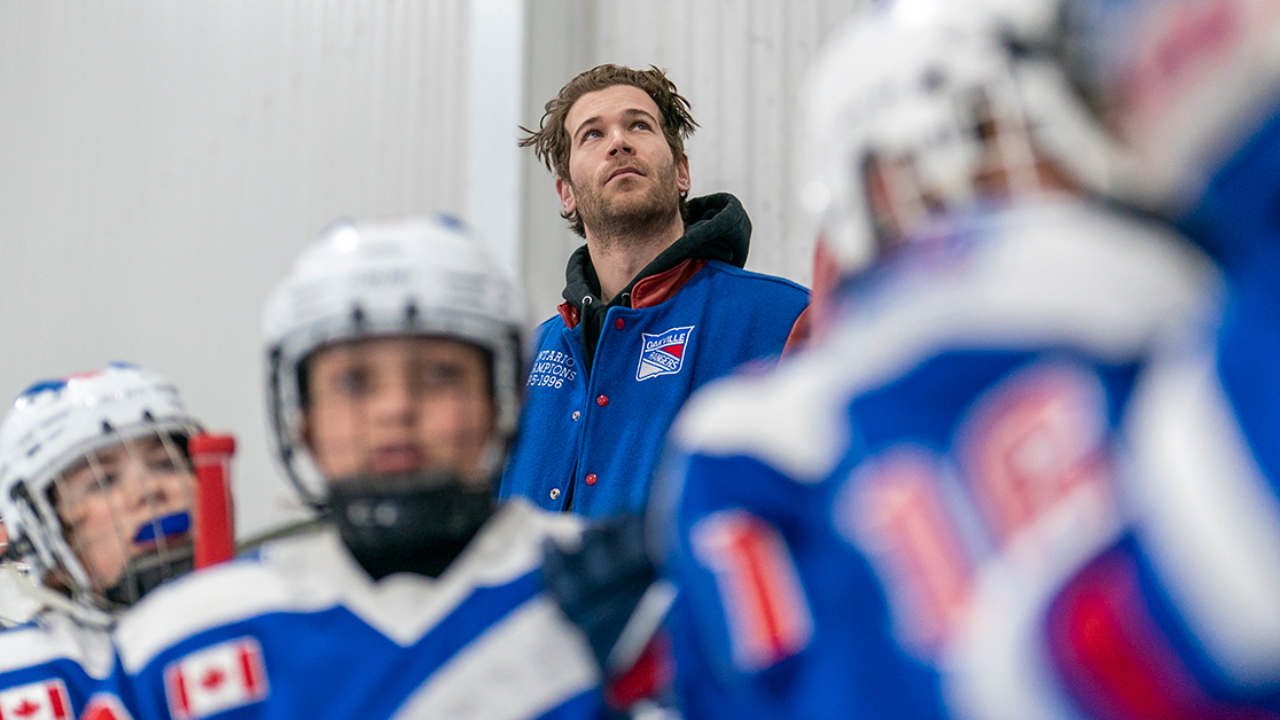

Just the other weekend I caught myself reacting to something on our bench that I’ve probably seen a hundred times before.
The other team took a penalty.
Immediately our bench erupted. Players started kicking the boards and tapping their sticks on the ice like something great had just happened.
Sure, I understand the excitement. A penalty means we’re about to get a power play opportunity.
But in that moment I found myself yelling down the bench:
“Don’t celebrate that.”
A few seconds later the referee skated by our bench.
He looked over and said, “Thank you.”
Then he added that it’s one of his biggest pet peeves.
That moment stuck with me.
A few days later I was at the rink again, this time watching a U11 game before ours. The exact same thing happened.
A penalty was called.
Immediately the players on the bench started cheering and tapping their sticks. But this time it wasn’t just the players.
Even the parents in the stands were celebrating.
You see it everywhere in hockey. In the NHL the crowd erupts when a penalty is called, even in situations where a player might be skating to the bench bleeding from a high stick.
Over time that reaction has trickled all the way down to youth hockey.
And it made me start wondering:
Why do we celebrate it at all?
I don’t think players are celebrating that someone got hurt or taken down. Most of the time they’re reacting to the power play that comes next.
But that still raises an interesting question: why does it need to be celebrated?
What Players Are Actually Celebrating
To be clear, I don’t believe players are celebrating the other team’s actions.
Most players aren’t cheering because someone got hooked, tripped, or knocked down. They’re reacting to the opportunity that comes next, the power play.
A man advantage is exciting.
It’s a chance to attack.
A chance to score.
So the bench reacts with excitement.
But even if the excitement is about the power play, the question still remains:
Why do we feel the need to celebrate the moment at all?
What Just Happened
A penalty doesn’t appear out of nowhere.
In most cases, one of your players was just taken down, slashed, hooked, or put in a vulnerable situation.
Something happened to create that call.
Yet the automatic reaction from the bench is celebration.
Not encouragement for the teammate who just absorbed the play.
Not immediate focus on the next shift.
Celebration.
Why It Happens
Bench reactions in hockey are often automatic.
Players learn these responses by watching older teammates, junior players, college teams, and professionals. Over time, the stick taps and cheers become part of the game’s rhythm.
This behavior is known as social mimicry; players repeating behaviors they’ve seen modeled around them.
Eventually, it becomes instinctive.
But automatic habits aren’t always intentional ones.
And sometimes coaching is simply about pausing long enough to ask:
Is this actually the culture we want to reinforce?
A Different Way to Think About It
A penalty already gives your team an advantage.
The reward is built directly into the rules of the game.
You’re getting two minutes with an extra player.
That’s the moment to prepare, not celebrate.
Encourage the teammate who drew the penalty.
Get the power play unit ready.
Focus on execution.
Because the real statement isn’t made on the whistle.
It’s made on the scoreboard.
The Real Response
Great teams don’t need to celebrate the opportunity.
They take advantage of it.
And when the puck drops on the power play, they make the other team regret the penalty.
Next time your team draws a penalty, take a second and watch your bench.
Do the players immediately start celebrating?
Or do they turn to the teammate who drew the penalty?
Do they get focused and ready for the power play unit?
Bench habits might seem small, but they quietly shape the culture of a team.
And sometimes the best coaching moments happen in the seconds after the whistle, when players reveal what they’ve learned to value.