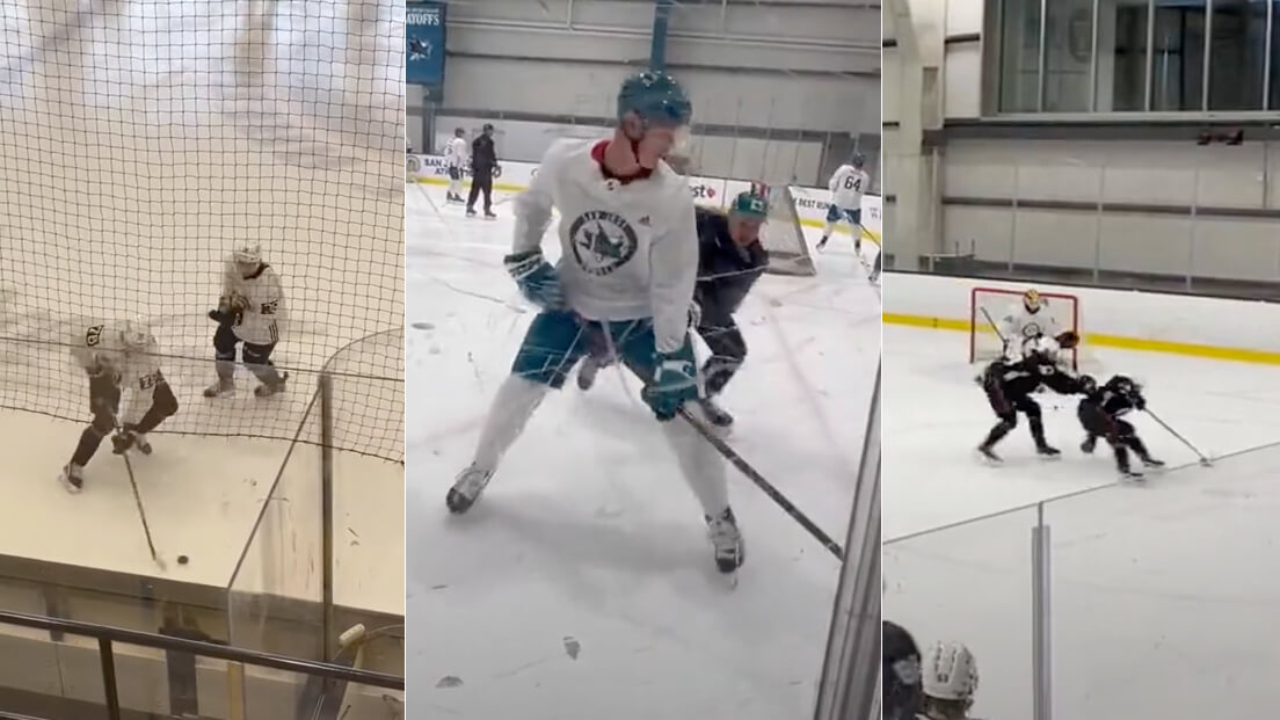

Evgeni Nabokov was drafted in the 9th round.
219th overall.
And here’s the crazy part:
The San Jose Sharks had never even seen him play before drafting him.
He spent years playing in Russia and Kazakhstan before finally coming to North America in his 20s.
No hype.
No fast track.
No “can’t miss” label.
When he arrived in North America, he wasn’t immediately handed anything either.
Minor leagues.
Backup roles.
Waiting.
Developing.
Learning.
Then opportunity showed up.
An injury to the starter opened the door.
And Nabokov took it.
What followed?
• Calder Trophy winner as NHL Rookie of the Year
• Multiple NHL All-Star appearances
• One of the winningest goalies of his era
• Franchise leader in wins and shutouts for the San Jose Sharks
Here’s the part that matters:
Evgeni Nabokov wasn’t developed on the timeline people obsess over today.
He wasn’t identified at 9.
Wasn’t rushed at 12.
Wasn’t treated like a finished product at 14.
He was allowed to:
• Grow
• Mature
• Develop through experience
• And become ready when HIS timeline arrived
A reminder for coaches and organizations:
Development is not linear.
And readiness cannot always be predicted early.
Sometimes the athlete who develops slower…ends up lasting longer.
That’s why youth sports environments matter so much.
Because the goal shouldn’t be identifying the “best” kids as early as possible.
It should be building systems where more kids have the chance to keep developing.
If this resonates with your organization…
Where might your current system be forcing timelines onto young athletes too early?
👇
If you want a framework to help evaluate that, DM me the word “SYSTEM” and I’ll send you the Youth Sport System Health Guide I use with organizations.