Coaches love stealing, borrowing, and sharing good drills. However, we spend a lot of valuable time searching for drills and creating practice plans only for our players to hit us with two common issues:
- Players "run the drill to run the drill"; sometimes failing to understand why we're running the drill, or...
- They fail to take the lessons or skills we work at practice and apply them properly (if at all) into games.
In my time as an assistant coach, I have seen plenty of times where we run a drill in practice, only to never talk to the players about when or how the drill applies to the game. Or worse, we waste time by running a drill for a situation that rarely occurs. We don't want to waste ice time by explaining how each drill applies to the game on the ice. And people are busy, so we don't want to spend time going over the practice plan drill by drill off-ice. But then we look at our team and wonder why we are still bad at these game situations that we just practiced.
This disconnect is why whenever I have a chance to run a practice, I want to use "game situation" drills as often as possible. As best as I can, I want to try and mimic what our players will see come game time. I'll still borrow or steal practice drills; but if it isn't already a game-situation drill, I try to think of ways to make it into one. How does this work? Well, let's take a standard drill and covert it to a "game situation" drill.
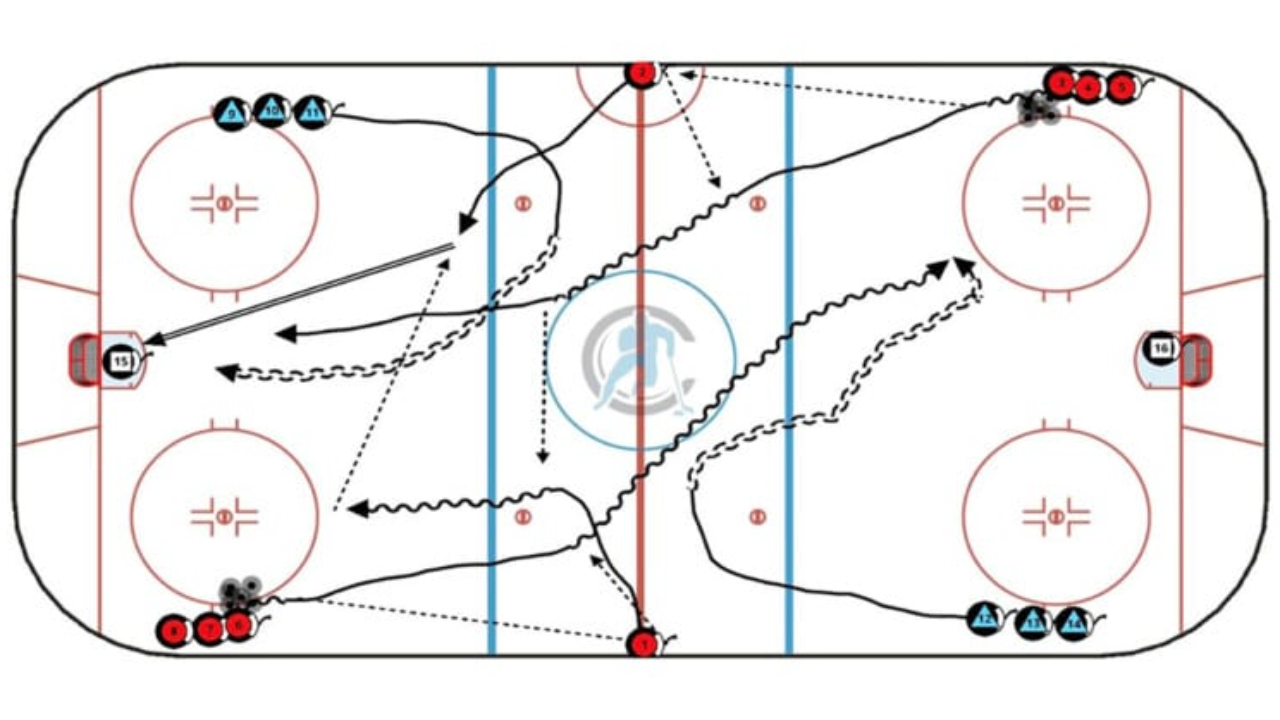
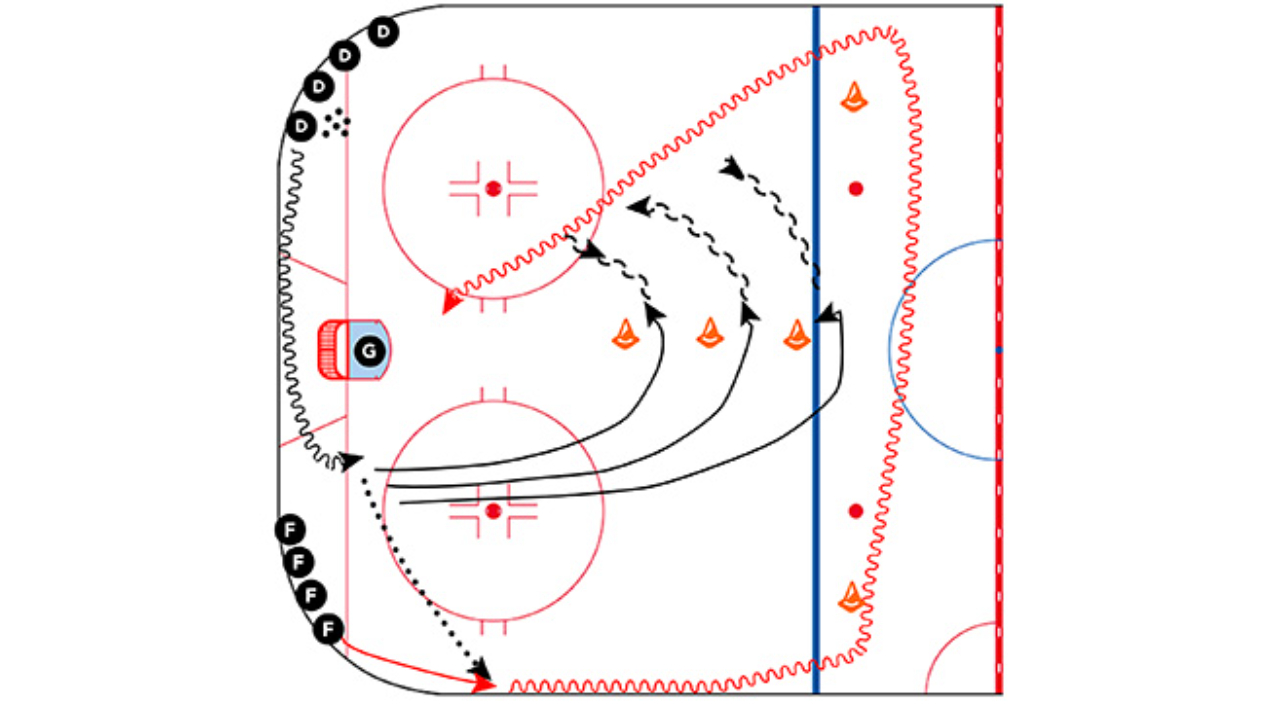
Below is simple drill where three forwards break from the wall and run different patterns to fill lanes. A defenceman will get a puck from a coach, make a regroup pass to a forward, and then all four skaters attack the defense, 4-on-2. It's a relatively simple drill that focuses on regroup patterns and getting a defender to join the rush as F4.
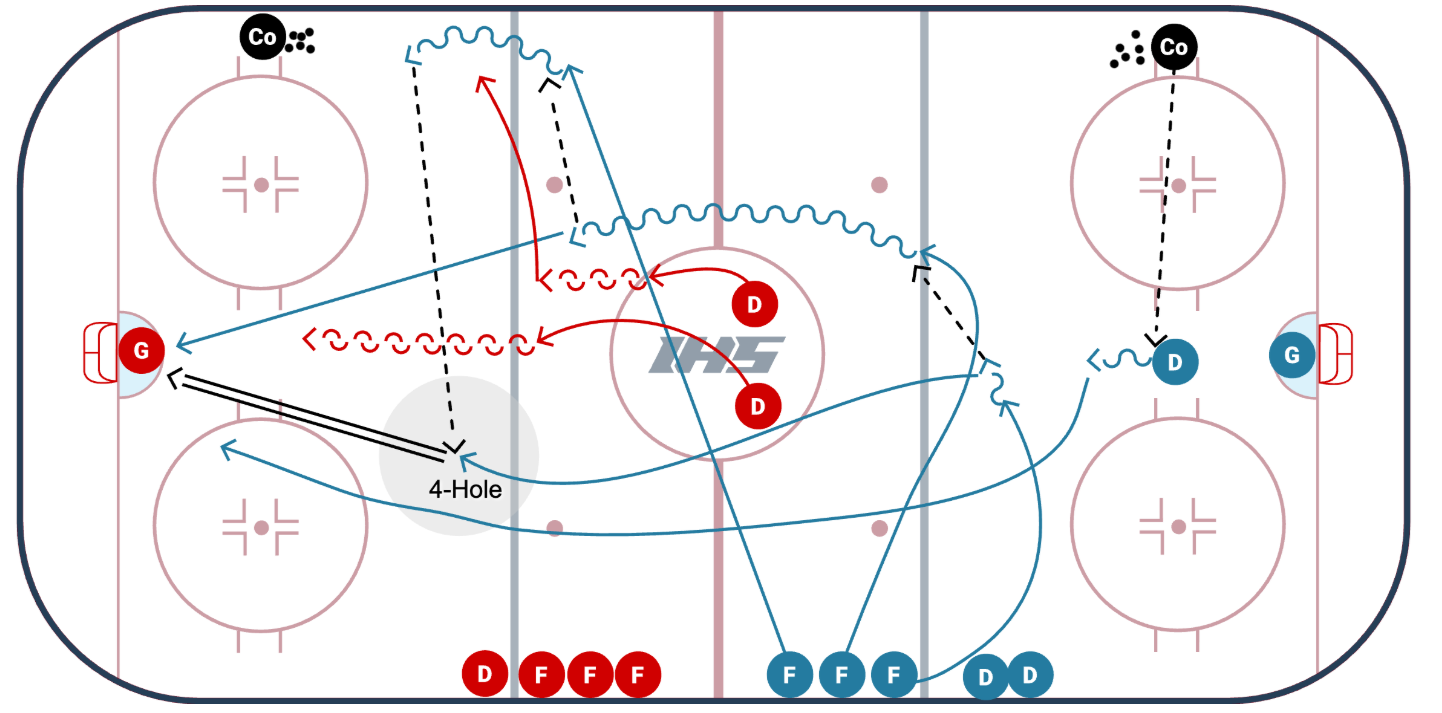
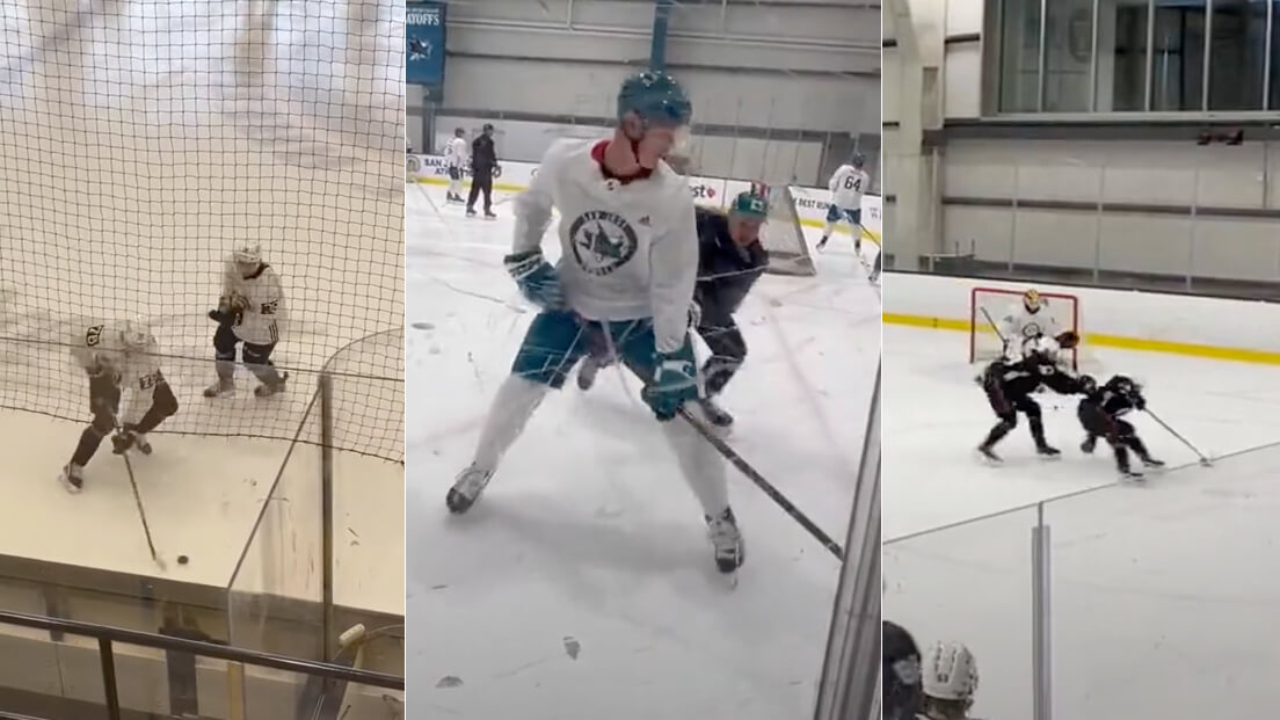
The problem is, when are players going encounter a situation in a game where three forwards are lined up against a wall like above? The closest game situation I can think of are Neutral Zone board battles. There are plenty of times where the puck will end up against the boards and our players will have to battle their opponents for possession. This would be a great drill to use so that our players know what to do if we win those board battles. However, in the original set-up, the drill isn't very game-like. So let's fix it by changing the starting positions.
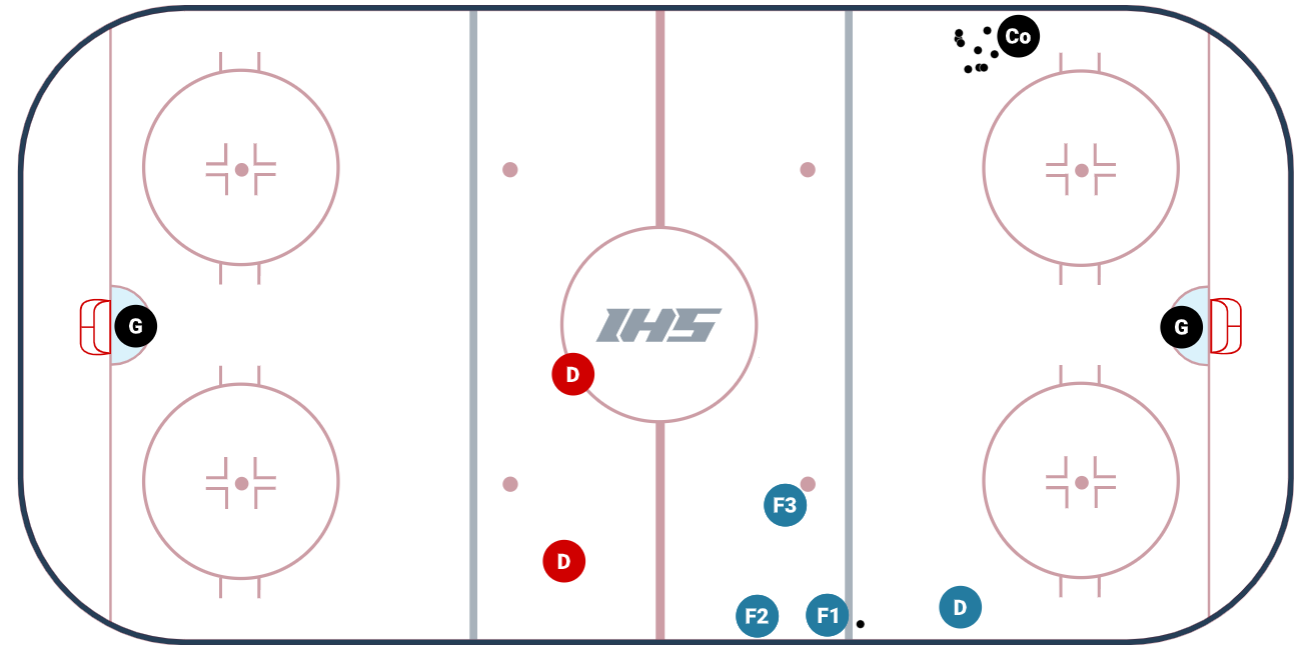
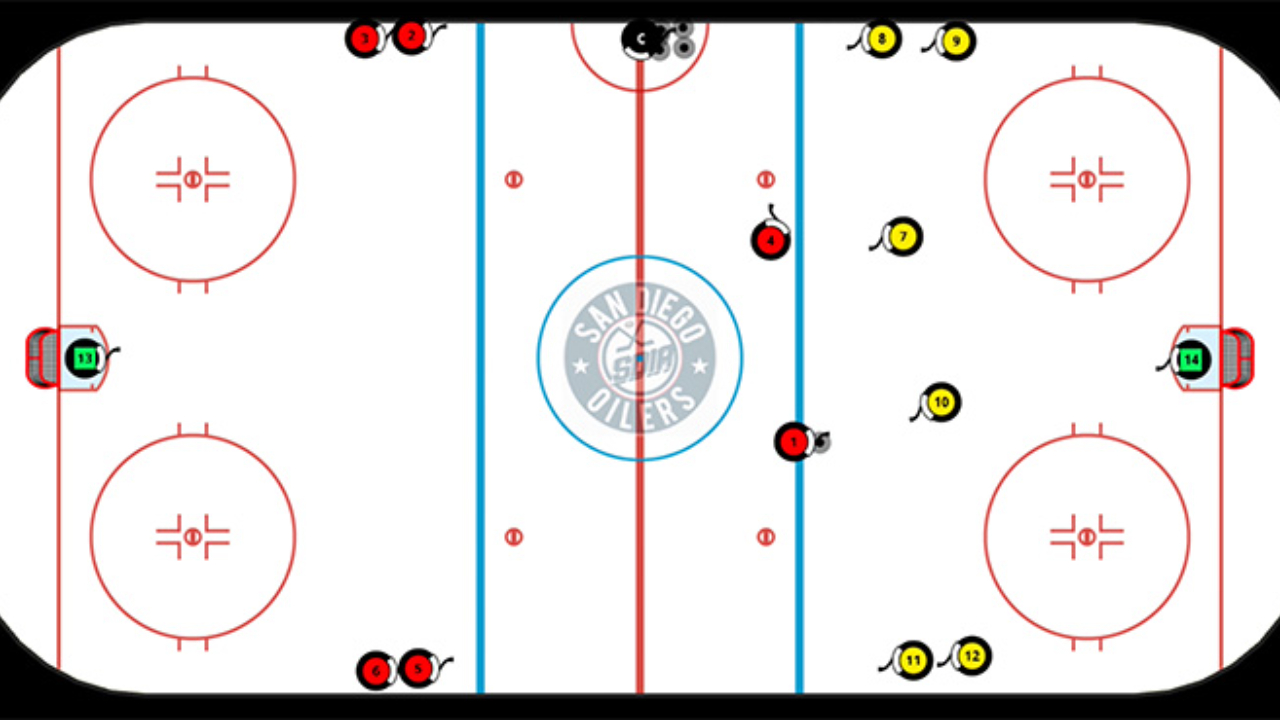
We've moved the forwards from a single line into a more game-like situation with F1 on the puck, F2 on the wall supporting in the scrum, and F3 as off-wall support. Our defenceman will be under F1 in low support. This is a game situation the players will often find themselves in. And with that in mind, we don't really need the coach to feed pucks to the D as we can start the drill by simply having F1 push a puck back to the defense, just like what should happen in a game. Also, there would and should be a second D on the ice, giving our D-man another pass option. Now, our drill set-up should look like this:
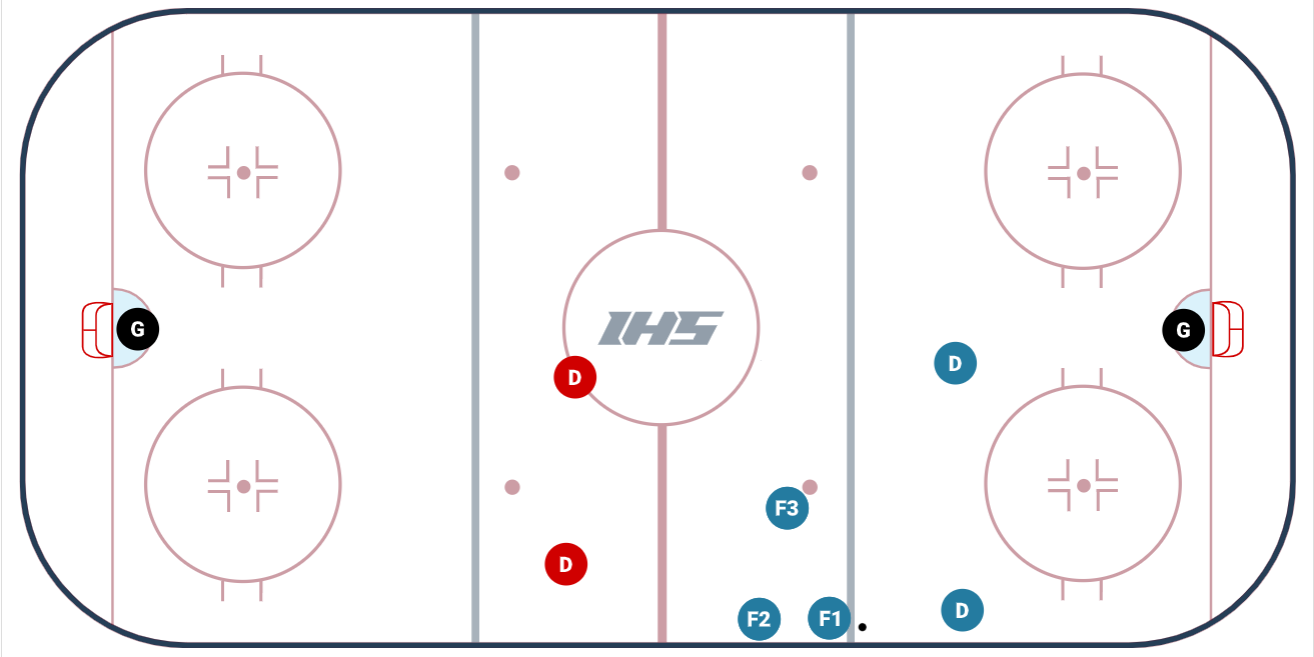
We can now run our drill as a five-man regroup from the wall. Our D-man will have pass options to all three forwards and to his D partner, and we can still have a defender join the rush as F4. So now our final drill will end up looking something like below. We have F3 going wide and filling the far lane, F2 and F1 can decide who does the center swing to fill the middle lane and who stays to be the near-wall outlet.
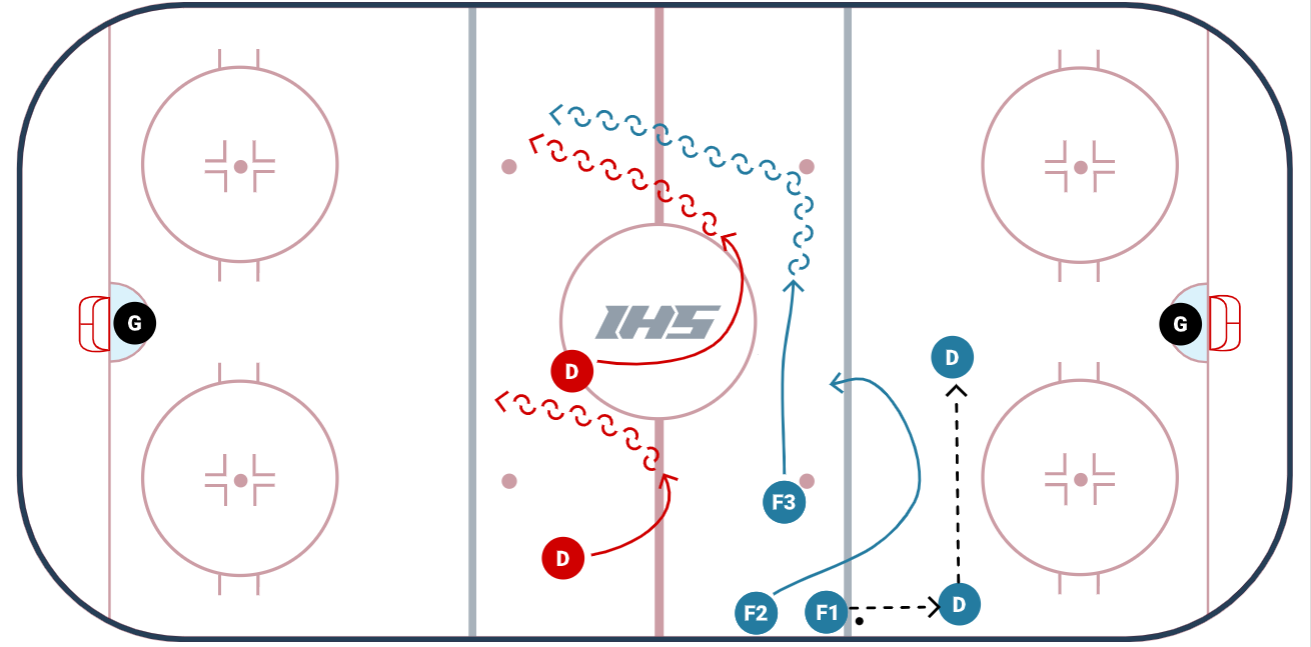
With these changes, we have now have a base drill. From here, we can even add one, two, or three forecheckers to add to the difficulty/realism of the drill. Place an opponent with the forwards and then forecheck the defensemen when the puck is moved. This will force the defense to make a good read and make a play to the appropriate teammate.
This drill now has a better chance of sticking with the players and being used during games, all while spending minimal time explaining how the drill translates.