By Coach Barry Jones IIHF Level 3 High Performance | USA Hockey Level 3 Performance
Why I Use This Task
I use this task because it allows athletes to explore options under pressure while learning to recognise soft ice. The constrained space gives players control over time, helping them slow the game down, protect the puck, and make better decisions when pressure arrives.
Athlete Section
Setup
-
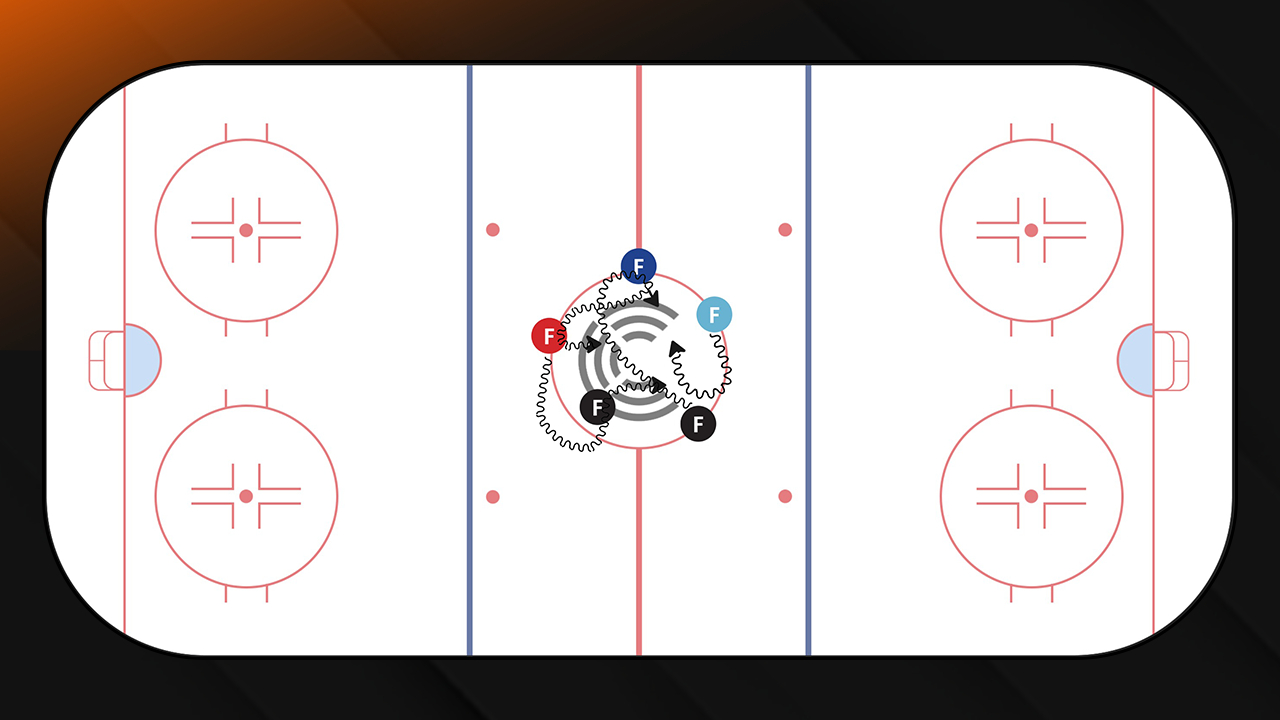
Playing area is scaled from the centre dots down, adjusted session-to-session.
-
Space includes corner, behind the net, and net-front.
-
2 Defenders and 2 Attackers start shoulder-to-shoulder at the top of the circles.
-
Coach spots the puck into the corner on the whistle.
-
+1 Attacker starts net-front and stays live throughout the rep.
Dynamics
-
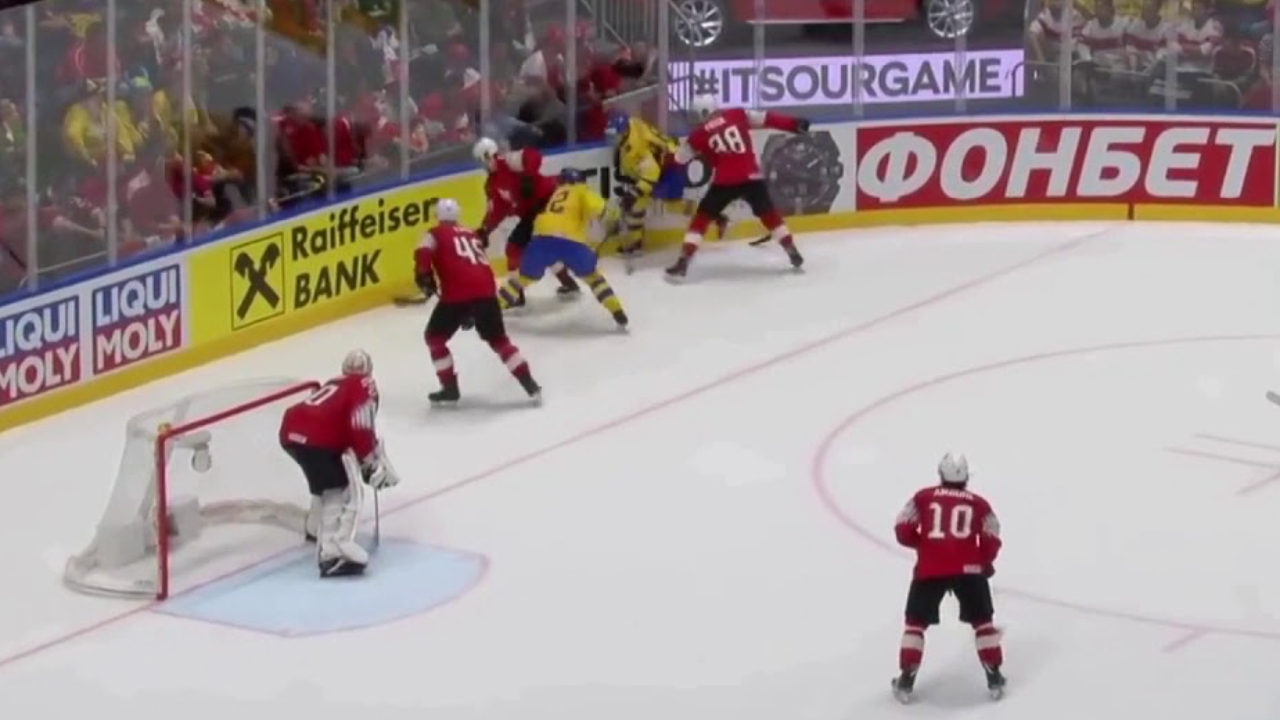
Whistle triggers a 50/50 race and body-position battle into the corner.
-
First contact matters, angle, hips, stick position, leverage.
-
Defenders must secure and control possession using soft ice, no throwaways.
-
Attackers pressure to recover the puck and connect to the net-front +1.
-
Once connected:
-
+1 can finish immediately, or
-
Attackers rotate into a live 3v2.
-
-
Rep length is 30–40 seconds.
-
Any goal inside the window triggers an immediate second puck to the corner.
-
Continuous play, no resets, no stoppage teaching.
Coach Section
Task
-
This task layers entry contact, puck control, and net-front connection in a compressed environment.
-
Ice scaling reduces excess options and highlights body position, pressure recognition, and calm decision-making.
-
The objective is not to escape pressure, but to use it to your advantage.
Outline
-
Set the upper boundary at the centre dots.
-
Align both pairs at the top of the circles.
-
Spot the puck to the corner on the whistle.
-
Allow the entry collision and retrieval to self-organise.
-
Progress by shrinking space or shortening decision time.
Role Ecology – Behaviours That Rotate
With the Puck
-
Scan early before pressure arrives.
-
Use body position to protect possession.
-
Move pressure first, then move the puck.
-
Make quick decisions based on what opens.
-
Use the net, boards, and feet as protection tools.
Supporting the Puck
-
Arrive on time, not early.
-
Create short, usable outlets.
-
Adjust spacing as pressure changes.
-
Be ready to become the puck carrier or the net option.
-
Maintain flow without crowding the puck.
Applying Defensive Pressure
-
Close with angle and stick, not straight lines.
-
Take away the middle first.
-
Force play into areas you can recover from.
-
Stay balanced through contact.
-
Transition quickly on regain.
Defending the Net Area
-
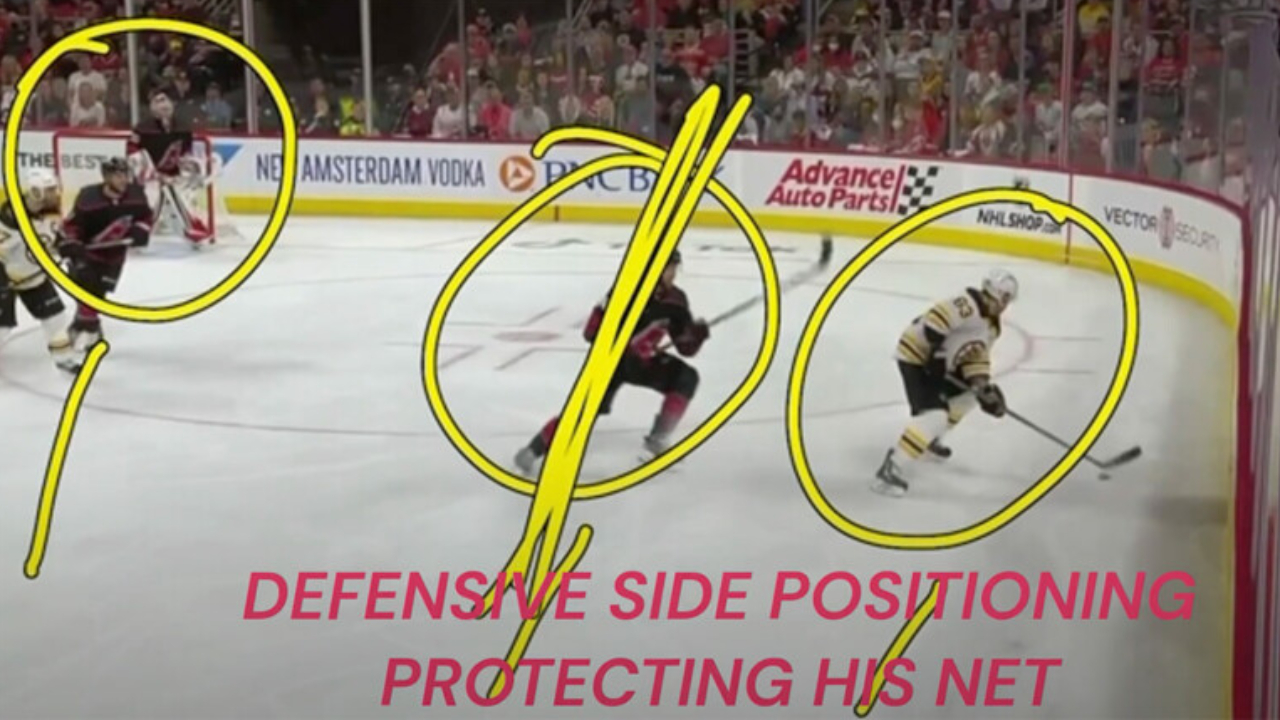
Protect the house before chasing the puck.
-
Eliminate passing lanes with body position.
-
Track sticks and bodies.
-
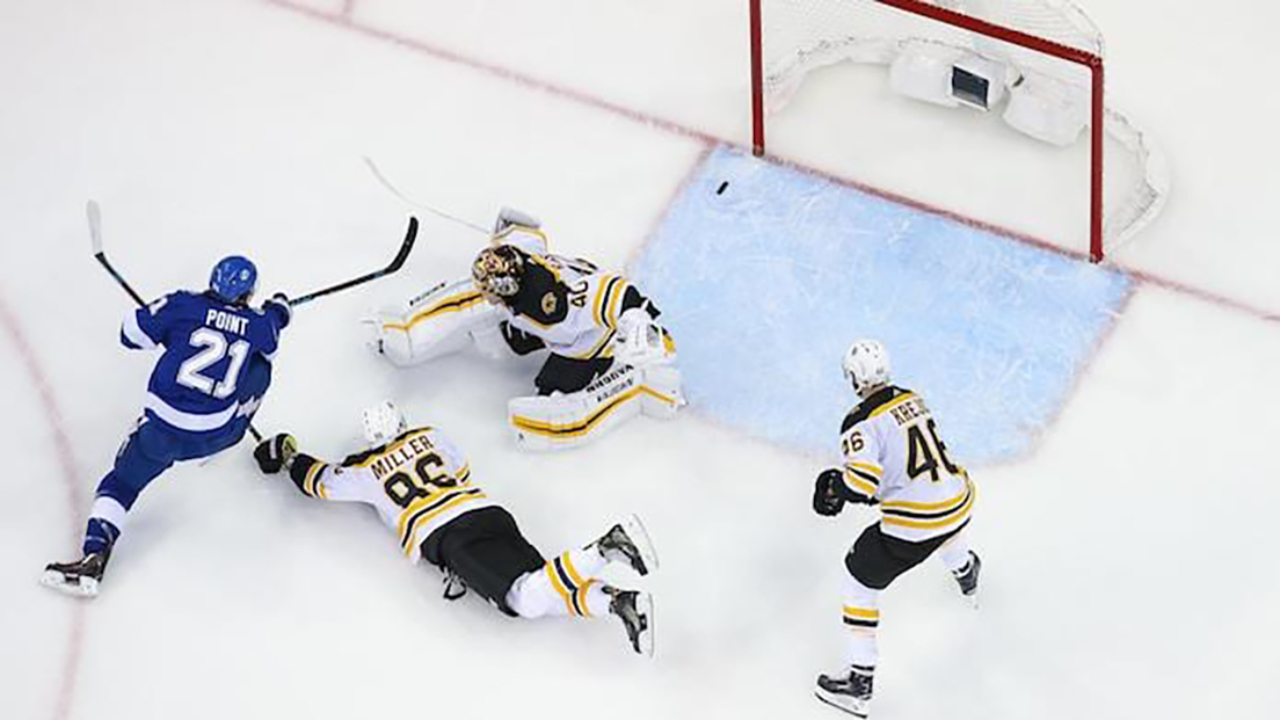
Stay connected to rebounds and second chances.
-
Communicate threats early.
These behaviours are not fixed. They rotate as possession and pressure change.
Goalie Section
-
Set depth early as play enters the zone.
-
Stay square through behind-the-net movement.
-
Track sticks and bodies, not just the puck.
-
Expect quick releases from net-front connections.
-
Reset quickly for second efforts after goals.
Constraints
-
Time: 30–40 seconds per rep.
-
Space: Scaled from centre dots down.
-
Start condition: 50/50 race and contact from the top of the circles.
-
Possession rule: Defenders may not throw the puck away.
-
Scoring rule: Puck must connect to net-front +1 before a finish.
-
Continuity: Goal inside the window triggers an immediate second puck.
Age-Appropriate Constraints
U11–U13
-
Slightly larger space.
-
Delay contact by one stride if needed.
-
+1 allowed lateral movement in the crease.
U14–U17
-
Standard scale.
-
Limit defender one-touch clears.
-
+1 must shoot or move the puck immediately.
High Performance
-
Tightest scale.
-
Shot clock once attackers recover.
-
Mandatory rotation into 3v2 after net-front connection.
Attractors Stabilised in This Environment
-
Early pressure recognition through the 50/50 entry.
-
Puck protection emerging as the preferred solution under constraint.
-
Net-front connection pulled into play by scoring opportunity, not instruction.
-
Defensive collapse forming naturally in response to threat.
-
Support timing adjusting to pressure density.
-
Role rotation becoming automatic through continuous play.
-
Transition speed increasing through second-effort demands.
-
Decision-making shaped by context, not pre-planned patterns.
Coach-to-Athlete Questions – Sample Prompts
Ask one question, then let the next rep answer it.
Entry & Contact
-
What told you you could win that battle?
-
Where did leverage come from?
With the Puck
-
What space felt usable?
-
When did pressure actually arrive?
Support
-
When did you become a real option?
-
What changed when you moved your feet?
Pressure
-
What were you trying to take away first?
-
When did they start running out of options?
Net-Front & Finish
-
What pulled the puck to the net?
-
What did the goalie give you?
Transition
-
How fast did your role change?
-
What did you notice first after the turnover?
If answers change over time, learning is happening.
Coaching Reminder
This is the Hedman standard.
Win the first contact, stay calm under pressure, and let the game reveal the solution.