TCS live was an incredible experience. After every single presentor wrapped up I thought to myself, "I am a better coach now than I was 30 minutes ago". There were many lessons learned, many affirmations made to what I am currently doing, and applicable tweaks to get a little more out of the teams I work with.
The following post is just a small sample of what I learned from the amazing weekend, with the intent of giving the youth coaches for U13 and lower some easliy applicable tips, and insights into some knowledge gained through the experience.
- Decision Making is Essential -
We already know this to be true. We know that to build hockey IQ, there should be problem solving / decision making elements to practice. This theme came up time and time again through the various presentors. Scripted drills kill creativity.
I know there are times in practice where we want to develop a particular skill, and so we design a drill to target that partictular skill. My takeway from TCS Live is to find a way to build decision making into those "scripted" drills.
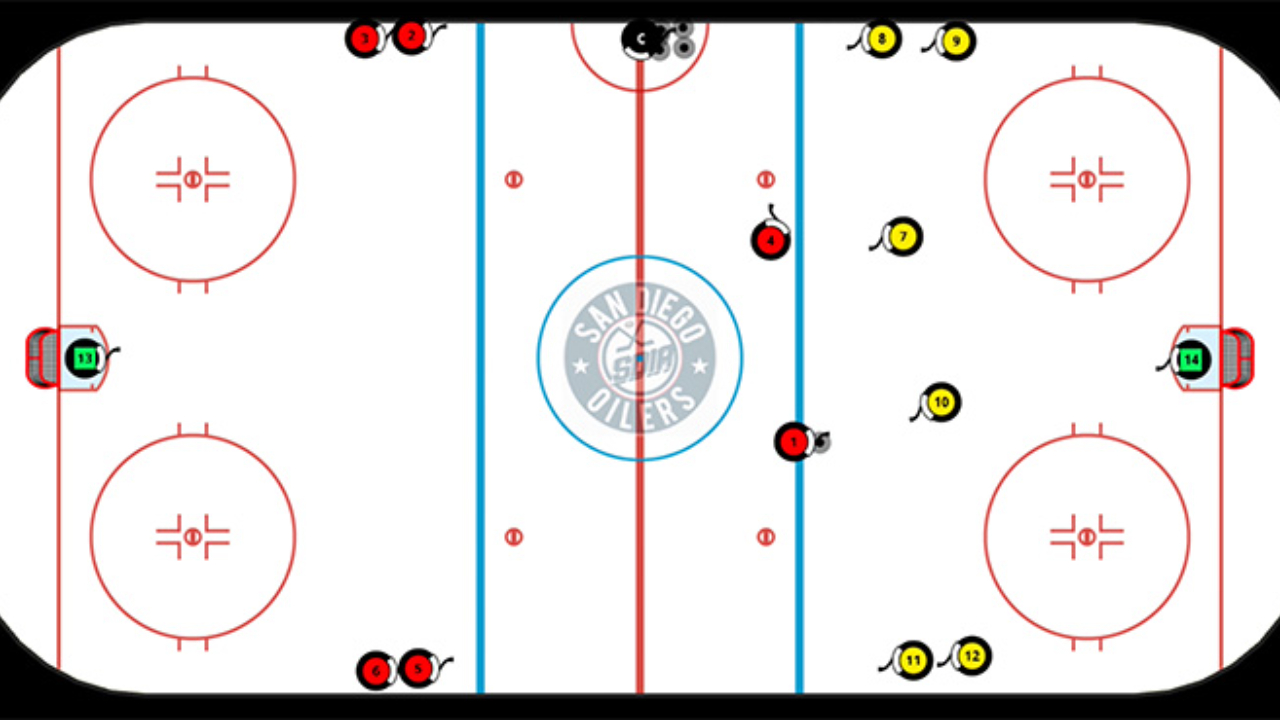
There are hundreds of ways we can add a small bit of decision making to the drills that we run. Take the example below.
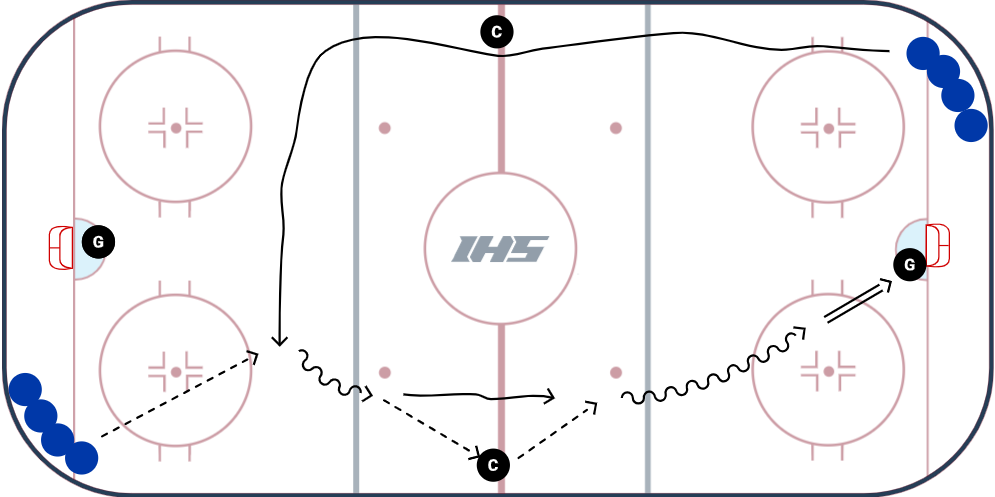
I'm sure you've run a flow / warm up drill that has some similar elements to this set up. A drill designed to get the legs moving, and get some touches in. An element of decision making can be made through the pass to the coach. The coach can choose to flip his stick upside down during the rep. This forces the player to look, see if there is a target available, and make the pass if it is, or skate the puck up the neutral zone if it isn't. It forces just a little more than simply skating through the motions. Even a small amount of decision making is better than nothing.
Here is another example I run with my goalies when the skaters are on the other end of the ice. The skill I want to build is the goalie's ability to play the puck. The decision making element builds the applicable hockey IQ.
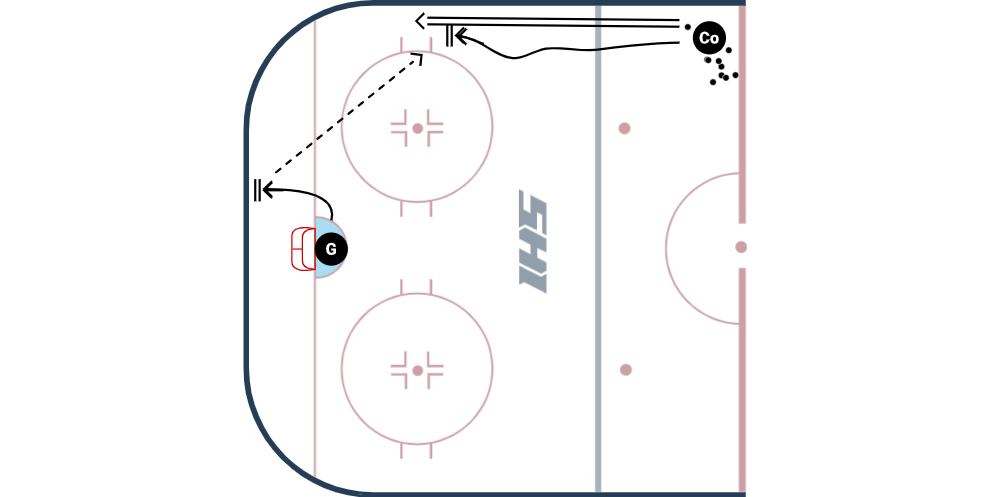
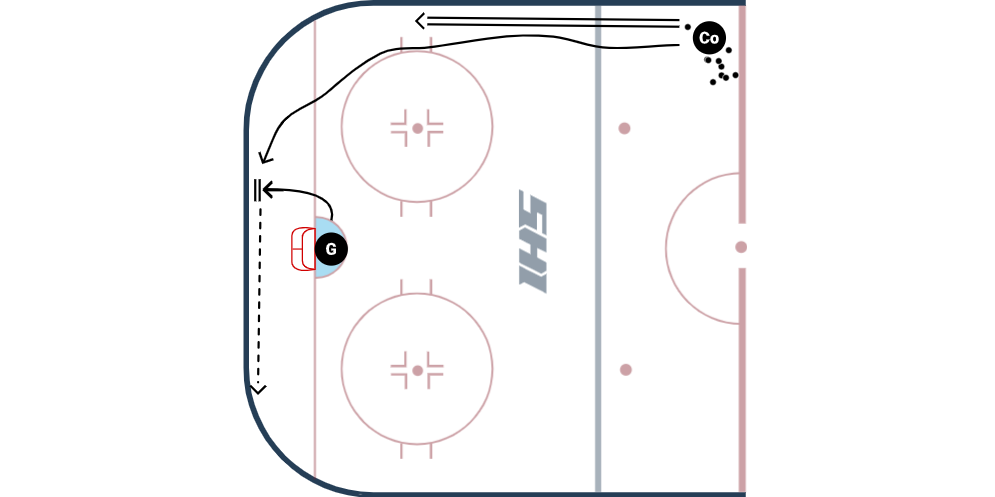
The rep begins with the coach rimming the puck into the zone. The goalie will stop the puck behind the net. They must keep their head up upon stopping the puck, and will learn to shoulder check upon arrival of the puck, as the coach will do one of two things as shown in the exmaples.
In the first example, the coach stops along the half wall, and acts as a teammate. The goalie will stop the puck behind the net with time, and make a good pass to begin the breakout.
In the second example, the coach applies hard forchecking pressure, in which case the goalie will move the puck to a safe spot on the ice. The goalie never knows ahead of time what the coach is going to do, so they need to make a decision based on the pressure shown.
There are hundreds of little tweaks / elements you can add to a drill to incorporate some sort of decision making component. Look for opportunities to implement them.
A challenge for myself this season is to modify established drills that I've run in past seasons, and apply the folliwing set of questions:
Are players searching for information?
Are they making decisions?
Are they solving problems?
If I can check yes, then players are developing their hockey IQ.
2. Dummy Defense Doesn't Work
This is certainly something that I need to work on. I have too often taught my young group a particular skill, provided them with senarios where the skill can be applied, and then set up drills that included a defender playing some level of dummy defense so that the offense can get reps implementing the skill. I don't think that the idea of dummy defense is completely broken, it may be used in practice as the "resting period" for players in between their reps. But it can can be improved on...
Bob Mancini listed 5 essential elements of good practice design:
1 Constant Decision Making
2 It looks like the game
3 Challenges the Players
4 Repetition without Repetitiveness
5 FUN!
I feel like #2 is missing when we instruct our players to give 50 - 80% effort defensively during a drill so that our offense can perform a skill.
Irro Mantyla later echoed this sentiment during one of the on-ice sessions. He said that players playing dummy D need to TRY to win the puck, it is more game-like.
So the application for me this season is to place restrictions on the D. Limit them to a part of the ice, or take their stick away, but they should always be trying. Players will find themselves, out of position, stickless, or on their butts on the ice while the other team has the puck, these are things that happen in hockey. Search for ways to create the offensive advantage you want your players to have so that they can execute the skills you are developing, but don't do it at the cost of teaching / allowing other players on your team to give a reduced effort for the rep.
3. We Coach the Body, We should be Coaching the Mind
This wasn't so much a theme that came up throughout the weekend, but rather my own realization. I have a responsibility as a coach to help prepare my athletes minds for the game of hockey. The Coaches Site obviously recognizes the importance of this part of the game by having Gary Makar, and Nick Johnson come out and give presentatinos on improving the cognitive, and mental aspects of the game.
We, as coaches naturally do this already. Think of an intermission where your team was down on the scoreboard, and their emtotions / attitudes were in the gutter as well. We give the speech, "Keep your heads up! We're not out of it. We're playing well, just keep banging away the way we are and we'll get the next one".
We pick up players who are being hard on themselves, and we psych players and teams up for big moments, and we model and teach how to handle heartbreak and loss.
This is part of being a coach. And just as I search for ways to better teach drills, skills and systems. My committment this season is to search for better ways to help my players with the mental side of the game.