Building a strong, balanced, and hockey-ready body does not always require a fully equipped gym. For young hockey players (ages 9-13) in particular, mastering bodyweight movements is the critical first step before adding external load. If a player cannot control their own body weight, they cannot efficiently control their body on the ice.
The following five exercises are foundational bodyweight movements that target the specific demands of hockey: unilateral strength, core stability, posterior chain engagement, and joint durability. When performed consistently, these exercises directly translate to a more powerful stride, better balance through contact, and improved on-ice endurance.
Why This Matters for Hockey
Hockey is a game of single-leg power, rotational core strength, and physical contact. Players must be able to produce force unilaterally while maintaining a stable core to resist being knocked off the puck. Furthermore, the hunched posture of skating requires targeted posterior chain work to prevent injury and maintain speed late in shifts.
These five exercises address all of these areas, building the structural integrity required for high-level performance.
Exercise Breakdown
1. Split Squat Hold
•Setup: Assume a split squat position with one foot forward and one foot back. Bend both knees.
•Execution: Hold the position statically, keeping the weight balanced on the front part of the front foot.
•Key Coaching Points: Ensure the front knee tracks directly over the foot and does not cave inward (valgus collapse). Hold for up to 30 seconds per side.
•Application: Builds unilateral lower body strength and stability, which is the foundation of a powerful skating stride.
2. Hamstring Hold
•Setup: Lie on your back with a neutral spine. Dig your heels into the ground.
•Execution: Squeeze your glutes and lift your hips off the floor. Actively try to pull your feet toward your body without actually moving them.
•Key Coaching Points: Perform with both legs simultaneously to build foundational strength. Maintain the glute squeeze throughout the hold.
•Application: Targets the hamstrings, a critical muscle group for stride recovery and top-end speed.
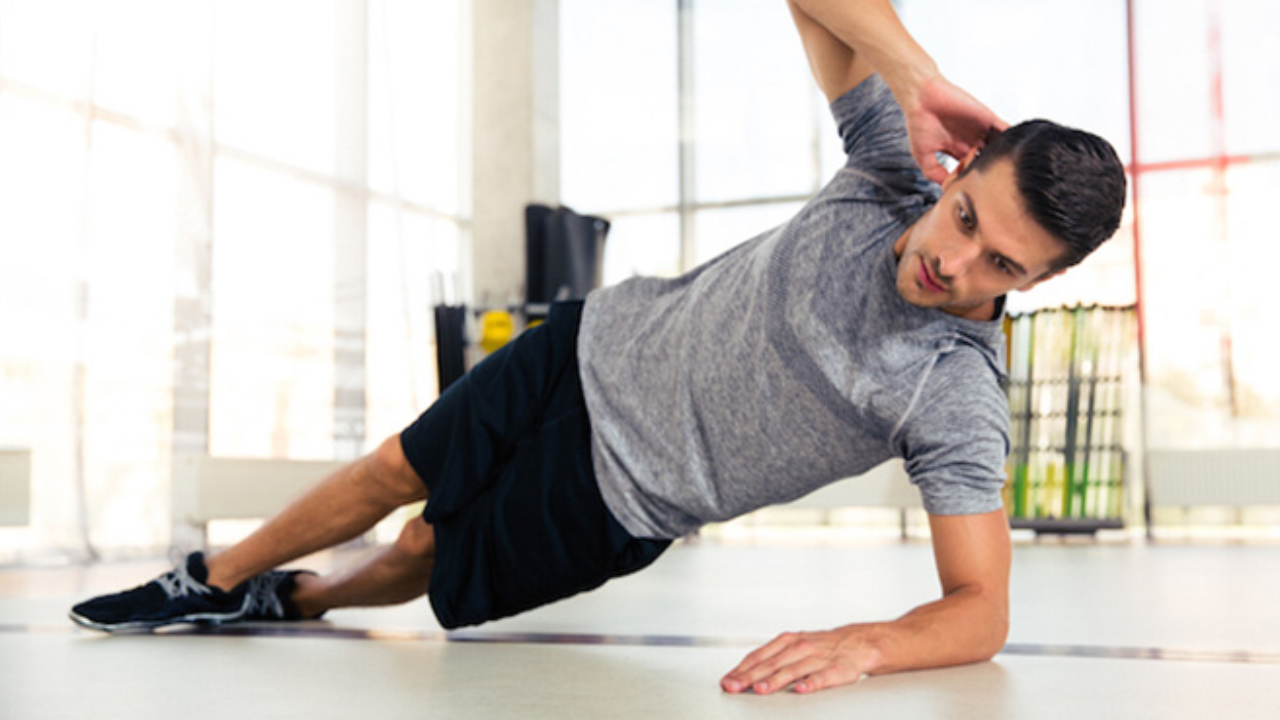
3. Front Plank & Side Plank
•Setup: For the front plank, rest on your forearms with elbows under shoulders. For the side plank, rest on one forearm with the body turned sideways.
•Execution: Hold the body in a perfectly straight line.
•Key Coaching Points: In the front plank, tuck the hips slightly and lock the shoulder blades. Imagine a hockey stick resting on the back—it should touch the head, upper back, and lower back simultaneously. In the side plank, place the top leg slightly in front of the bottom leg to protect the lower back.
•Application: Locks the core, creating the stability needed for efficient energy transfer during the stride and resisting physical contact.
4. Superman Hold
•Setup: Lie flat on your stomach with arms extended in front of you.
•Execution: Lift both arms and legs off the ground simultaneously. Think about making the body "long" from fingertips to toes.
•Key Coaching Points: Build up to a 30-second hold. This actively engages the lower back, mid-back, upper back, glutes, and hamstrings.
•Application: Builds posterior chain endurance, supporting the hunched skating posture and generating power during long shifts.
5. Prone Shoulder Rotations
•Setup: Lie on your stomach with your legs resting on the ground.
•Execution: Lift your arms as high as possible. Slowly rotate them backward in a sweeping motion until your hands reach your lower back. Pause, then slowly rotate them forward to the starting position.
•Key Coaching Points: Keep the legs grounded. When the hands reach the lower back, keep them hovering—do not let them rest on the body. Take 4 seconds to rotate back and 4 seconds to rotate forward. Build up to 8 reps.
•Application: Hockey is a collision sport that takes a toll on the shoulders. This exercise builds the mobility and structural strength needed to handle physical play and prevent injury.
Final Thoughts
Strength training for hockey does not have to be complicated to be effective. By mastering these five bodyweight exercises, players can build the unilateral strength, core stability, and posterior endurance required to dominate on the ice. These movements require zero equipment, making them the perfect foundation for any young athlete's off-ice program.
About the Author
Travis Martell is the founder and head coach of Martell Elite Fitness, specializing in off-ice development for hockey players.
🌐 Website: MartellEliteFitness.com
📲 Follow on Instagram: @martell.elite.fitness
📺 YouTube: YouTube.com/MartellEliteFitness