For young hockey players, core strength isn’t just about having a strong midsection. It’s about building the stability, posture, and control required for efficient skating. The core dictates how well an athlete maintains balance, transfers force, and controls their body through every stride, transition, and pivot.
In this article, we break down three foundational core exercises that directly support better skating mechanics. These movements are simple, accessible, and require no equipment, making them ideal for youth players training at home or during team off-ice sessions.
Each exercise reinforces essential movement patterns needed for skating: spinal control, lateral stability, and dynamic coordination.
1. Dead Bug Hold — Teaching Spinal Control and True Core Stability
Young players often struggle with controlling their spine during movement. When the low back arches excessively, whether during a stride, shot, or change of direction, this leaks power and their balance suffers.
The Dead Bug Hold teaches athletes how to maintain a neutral spine while coordinating opposite arm and leg movements. This is a direct parallel to the cross-body coordination required in skating.
Key Coaching Points
-
Knees positioned directly over hips
-
Toes pulled toward shins (encourages proper hip position)
-
Hands stacked over shoulders
-
Lower back pressed firmly into the floor — no gaps
-
Hold each extension for five seconds
A good cue for coaches: “If you can slide a hand under your low back, reset.”
Athletes should begin with 3 reps per side, progressing to 5 reps per side as control improves.
Why It Transfers to Skating
-
Reinforces anti-extension strength
-
Builds awareness of spinal position
-
Improves stability during stride recovery
-
Reduces unnecessary torso movement while skating
Players who master this exercise develop the foundation for better balance and cleaner transitions.
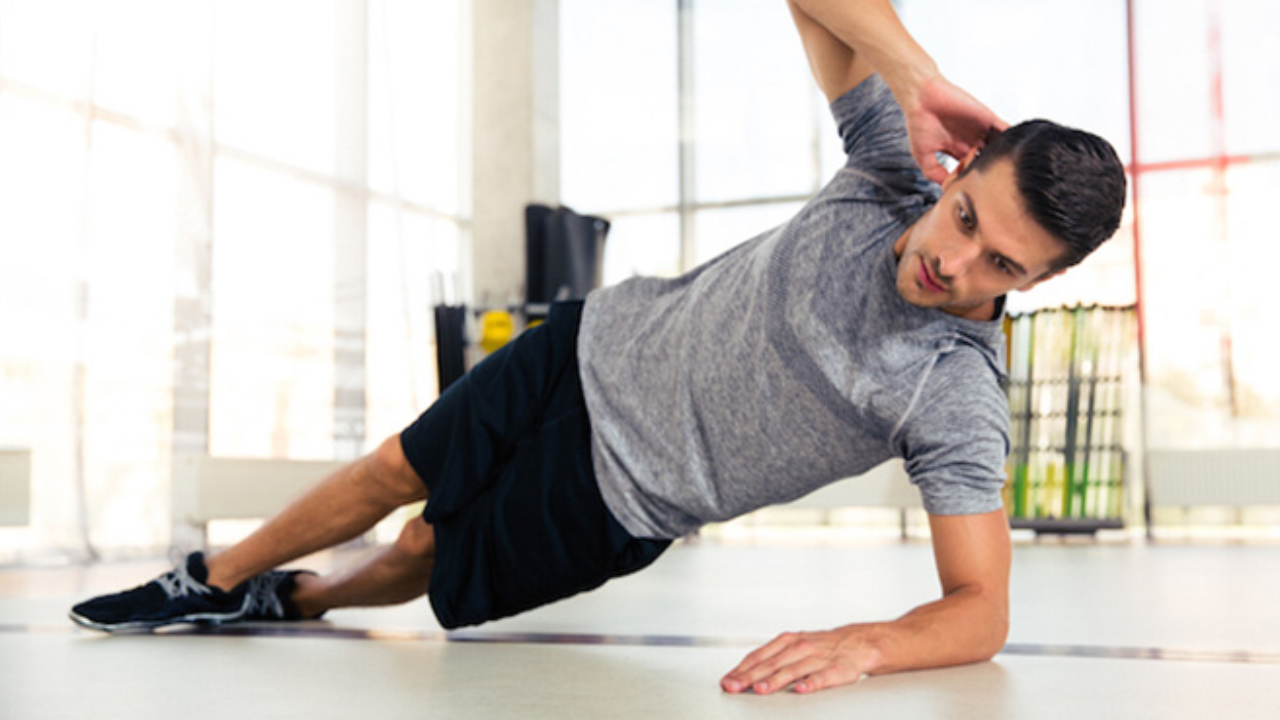
2. Side Plank (Bottom Knee Down) — Strengthening Lateral Core and Hip Stabilizers
Skating is lateral by nature. Every stride demands a strong Glute Medius to activate and stabilize the pelvis and keep the hips level. Weakness here often leads to knee collapse, short strides, and increased injury risk.
The Side Plank with the bottom knee down is a youth-friendly modification that still trains lateral stability safely and effectively.
Key Coaching Points
-
Elbow directly under the shoulder
-
Straight line from head through hips
-
Bottom knee acts as the base
-
Build up to a 30-second hold per side
Once the hold becomes easy, progress to controlled top-leg lifts — aiming for 10 reps per side, squeezing the Glute Medius on each lift.
Why It Transfers to Skating
-
Enhances lateral stability needed for strong edge work
-
Strengthens hip abductors for a more powerful stride
-
Improves balance and torso alignment during crossovers and transitions
-
Helps prevent knee valgus (inward collapse) during skating
This exercise develops the “side-to-side strength” that every young skater must master.
3. Bear Crawls — Training Dynamic Core Stability and Multi-Directional Control
Skating is rarely linear. Players change direction, accelerate, decelerate, pivot, and recover quickly, all of which require coordinated, full-body control.
The Bear Crawl builds exactly that: dynamic, multi-directional stability through controlled hand-and-foot movement. It teaches athletes how to brace effectively while the limbs move independently which is
a key skill for skaters who struggle to stay stable during quick transitions.
Key Coaching Points
-
Hands under shoulders, knees under hips
-
Knees lifted slightly off the floor without hips popping up
-
Neutral spine — flat enough to balance a cup of water
-
Move opposite hand and foot together
-
Take two steps forward and two steps back, repeated five times
-
Follow with controlled side-to-side steps
Why It Transfers to Skating
-
Builds coordination across the upper and lower body
-
Strengthens the core during movement (not just static holds)
-
Mimics the multi-directional control needed for agility
-
Helps players maintain posture during difficult skating tasks
Bear Crawls are one of the best ways to develop the athleticism required for reactive, game-speed skating.
How Often Should Youth Players Perform These Exercises?
These three exercises can be completed three times per week, and because they require no equipment, they can be done:
-
At home
-
During pre-practice off-ice sessions
-
As part of a structured training plan
Progression should be gradual, focusing on:
-
Increasing holds (Dead Bug & Side Plank)
-
Adding leg lifts once alignment is consistent
-
Completing more controlled sets of Bear Crawls
The priority is always quality over quantity.
Key Takeaways for Coaches
-
Core stability is foundational for skating performance and injury prevention.
-
Proper training ensures young players maintain control through every stride and transition.
-
These exercises emphasize positions and muscles directly tied to better balance, posture, and power on the ice.
-
Movement quality — not speed or volume — determines the effectiveness of each drill.
-
Consistency develops the strength and control needed for long-term skating improvement.
By building strong, stable, and coordinated athletes off the ice, coaches can significantly enhance the skating ability of their players on the ice.
About the Author
Travis Martell is the founder and head coach of Martell Elite Fitness, specializing in off-ice development for hockey players.
📲 Follow on Instagram: @martell.elite.fitness