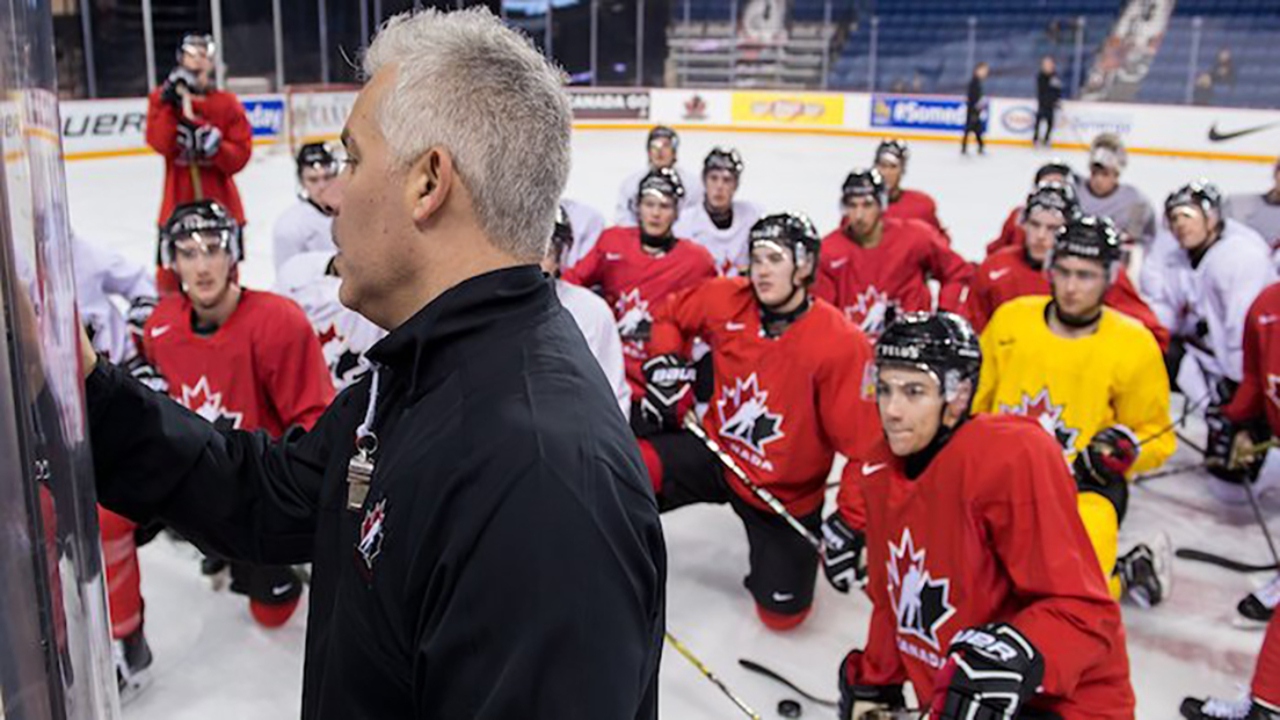
One of the things I appreciate most about the USA Hockey Coaching Education Program is that it doesn't just teach coaches what to teach. It teaches us how to coach.
The program identifies five fundamental coaching skills: explaining, demonstrating, observing, analyzing and making decisions, and generating and providing feedback. The skills are interconnected and they build on each other.
If someone asked me today which of those skills has had the greatest impact on my coaching career, my answer would probably surprise them: Observation.
Every coaching decision begins with observation. If we don't accurately understand what's happening on the ice, it's difficult to explain it, demonstrate it, analyze it, or provide meaningful feedback to our players. Everything else depends on first seeing the game correctly.
Observation, however, is more than simply watching the game. It's recognizing cause and effect and seeing how one decision creates another. It's noticing patterns that others may not see. Observation is where coaching begins.
Back in the late 1980s, while working for the Minnesota North Stars, we had just drafted a young player named Mike Modano. Like everyone else, I was watching practice. Mike's speed immediately jumped out. He could separate from players in just a few strides.
As practice continued, I turned to Chuck Grillo, our Director of Player Personnel, and said, "Chuck, we've got a problem." He looked at me and smiled. "A problem? We just drafted Mike Modano." I said, "Exactly." He asked, "What's the problem?" I replied, "He's so fast that our defensemen don't recognize when he's open. By the time they see him, the opportunity is already gone. We need defensemen who can process the game faster."
Most people were watching Mike Modano. I was watching what Mike Modano was doing to everyone else. Great players don't simply play the game faster. They force everyone else to think the game faster.
Years later, while coaching at Augsburg, I experienced that same lesson from a different perspective. There were times during a game when I would quietly say, "Uh-oh." My assistant coaches would look at me because nothing had happened. We still had the puck. We hadn't given up a scoring chance. Everything looked fine. Sometimes they'd ask, "What?" I'd simply answer, "I know where this is going."
Maybe our defenseman pinched at the wrong time. Maybe our weak-side winger drifted out of position. Maybe our center stopped moving his feet for just a second. None of those mistakes necessarily hurt us immediately. Sometimes the other team never recognized the opportunity, and nothing happened. But if they did... I knew what was coming.
Years of coaching taught me that hockey is often a game of dominoes. The mistake that ends up on the scoreboard usually starts much earlier. By the time the puck is in your net, the real mistake has already happened. The goal wasn't the problem. It was simply the final result of several decisions that came before it.
People have asked me how I knew something was about to happen. The truth is that I wasn't trying to predict the future. I had simply trained myself to watch the game differently. Whether I was coaching college hockey, watching one of my kids play, or sitting in the stands at a youth hockey game, I found myself asking the same three questions over and over:
• What just happened?
• Why did it happen?
• What's likely to happen next?
The first question helps us observe. The second helps us understand. The third teaches us to anticipate. Those three questions changed the way I watched hockey. More importantly, they changed the way I coached.
I was reminded of that lesson while watching one of my favorite westerns, The Outlaw Josey Wales. Josey walks into town carrying supplies and suddenly finds himself facing four Union soldiers.
Most people remember the gunfight. The part I remember came afterward. Lone Watie, Josey’s travel companion, asked him a simple question: "How did you know which one was going to shoot first?" Josey's answer wasn't about guns. It was about observation. He talked about one man's flap holster. Another man's scared eyes. Another man's crazy eyes. He wasn't looking at four soldiers.
He was reading four different people. Then Lone Watie asked about the fourth soldier. Josey simply answered, "Never paid him no mind. You were there."
I've always liked that exchange because it contains two important lessons. The first is observation. The second is trust. Josey didn't waste time worrying about something that wasn't his responsibility. He trusted the man beside him to do his job.
Great hockey teams work the same way. The best players don't chase everything. The best coaches don't correct everything. They recognize what matters and they trust the people around them.
Observation is what separates experienced coaches from inexperienced ones. An inexperienced coach sees the turnover. An experienced coach sees the decision that caused the turnover. An inexperienced coach sees the goal against. An experienced coach recognizes the first domino that started falling twenty seconds earlier.
When I look back over my career, whether it was watching Mike Modano at a North Stars practice, standing behind the bench at Augsburg, coaching one of my own kids, or watching an old western on television, the lesson has always been the same. The people who become exceptional in any profession usually aren't reacting to what everyone else sees. They recognize what everyone else has missed. Once you learn to recognize that first domino, you often have the opportunity to prevent the last one from ever falling.
(This is one in a series of articles intended to challenge coaches to think differently about the game, their players, and themselves.)