The Missing System? Why the Mental Side Still Runs on Gut Feel
Think about how your program handles physical development. There's a baseline test in the fall. There's a plan built from it. There's a retest, so you know if the plan worked.
Now think about how it handles skills. Video. Review. Teaching points. Reps. More video.
Now think about how it handles the mental side.
For most programs — including well-run, well-coached, genuinely player-first programs — the honest answer is some version of this: a guest speaker in October, a "be resilient" speech in February, and a coach doing their best to read body language on the bench. Confidence gets noticed when it disappears. Focus gets addressed with a talk. And the athletes who quietly struggle with pressure get labeled as soft, or streaky, or "not a big-game player," because nobody has anything better than a label to work with.
I want to be clear about something before I go further: this is not a criticism of coaches. I've spent over a decade working in high-performance environments across hockey, baseball, lacrosse, and basketball, and the coaches I work with care deeply about this part of the game. The problem isn't effort or intent. The problem is that nobody ever handed you a system. You were given testing protocols for fitness and video tools for skills — and for the mental side, you were given a pamphlet and good luck.
That's an infrastructure gap, not a coaching failure. But it's still a gap.
The test I'd ask you to run
Imagine running your strength program the way most programs run mental development.
No baseline testing in September — you just eyeball who looks strong. No individual plans — everyone gets the same speech about working hard in the gym. No retesting — you simply hope it's improving. And when a player's strength fails them in March, you shrug and say some guys just aren't gym guys.
You would never accept that. Not for one season. Yet swap "strength" for "composure" and that's the standard operating procedure at most rinks.
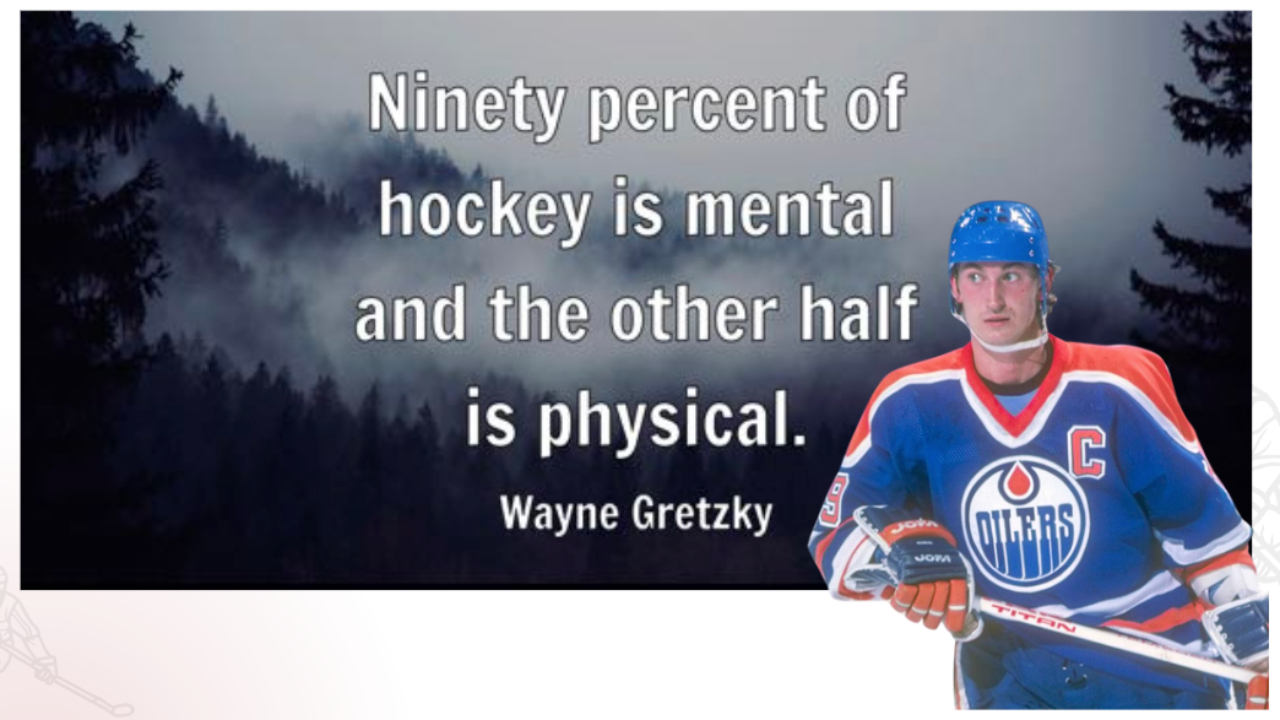
The mental side is the part of performance everyone agrees matters most when the games matter most. It's also the only part of most development programs with no baseline, no plan, and no measurement. It runs on gut feel — and gut feel isn't a system.
What a real system requires
A mental development system doesn't need to be complicated. But it does need the same four elements every other part of your program already has.
1. An honest baseline. Not a guess, not a vibe, not the coach's read on who "seems confident." An actual assessment worth trusting — one that measures specific, defined mental-performance factors, not a horoscope. (How to tell the difference between a trustworthy assessment and a quiz with good marketing is its own topic — I'll write about it separately, because coaches deserve a straight answer.)
2. Clear priorities per athlete. A sixteen-year-old whose challenge is composure under pressure and their teammate whose challenge is confidence after mistakes do not need the same intervention. The team speech can't fix both — it's the mental equivalent of prescribing every player identical skate blades. A baseline only becomes useful when someone turns it into "here's what this athlete should work on next."
3. Deliberate training, inside the week you already run. This is where the "I don't have time for a psychology program" objection dies, because the best mental training doesn't live in a classroom. It lives in practice design: small-area games with a pressure consequence, structured reset routines between reps, review habits that train athletes to respond to mistakes instead of spiraling on them. Mental reps ride along with the hockey you're already coaching.
4. Remeasurement. Growth is a trendline, not a feeling. If the mental side mattered enough to assess in September, it matters enough to reassess later in the season — the same way you'd never run a fall fitness test and simply never check again.
Baseline. Priorities. Training. Remeasurement. If any one of the four is missing, you don't have a mental development system. You have mental development intentions.
"But I'm not a psychologist"
Correct — and the system doesn't ask you to be. You also aren't a physiotherapist or athletic therapist, an equipment manager, strength coach, or a nutritionist, and your program handles can handle some or all of those just fine, ecause your job as a coach or program leader is to build the structure those specialists plug into.
The mental side works the same way. Coaches don't need to interpret assessments or run interventions any more than they need to read bloodwork. They need a program where that expertise has a place to plug in — and where what comes back to the bench is practical: here's what this group needs, here's how to build it into your week.
Where to start
Start with one question at your next staff meeting: where is our baseline?
If the answer for fitness is a testing protocol and the answer for skills is a video library, but the answer for the mental side is silence — that's the missing subsystem. Naming it is the first step. Holding it to the same standard as everything else you run is the second.
The athletes already know this part of the game decides careers. Our programs should treat it that way.
--
Joshua Hoetmer, MA, is a Certified Mental Performance Consultant® and Counselling Therapist with over a decade in high-performance sport across hockey, baseball, lacrosse, and basketball. He co-founded Mental Metrics Lab with Dr. Sharleen Hoar, PhD, Certified Mental Performance Consultant® and High Performance Sport Scientist, who has supported athletes and coaches across five Olympic and Paralympic cycles, Vancouver 2010 to Paris 2024. Mental Metrics Lab is a structured mental performance system for athlete development, built on the belief that the mental side deserves the same structure as the physical. Learn more at mentalmetricslab.ca.