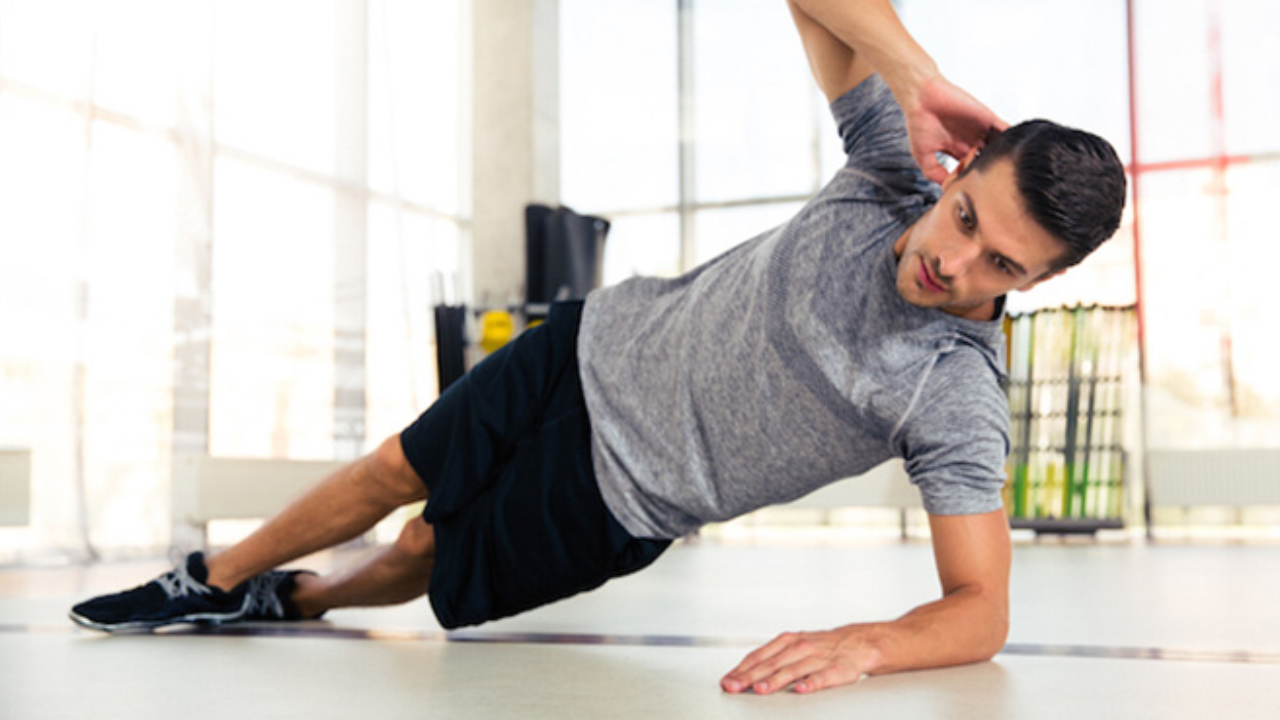
Core strength is the foundation of a hockey player's balance and power. When a player battles in the corners or takes a hit in open ice, their ability to stay on their feet depends entirely on how well they can brace their core and stabilize their spine.
The High Plank (or push-up top position hold) is a fundamental exercise for building this essential shoulder stability and core strength needed to be strong on the ice. It teaches athletes how to properly "stack" their ribs and hips together. However, it is frequently performed with poor form, which neutralizes its benefits. By using a simple piece of equipment already in the dressing room, coaches can ensure their players are executing this movement perfectly.
Why This Matters for Hockey
A weak core leads to a weak skater. If a player cannot maintain a rigid, stable spine while supporting their own body weight on the floor, they will not be able to maintain stability when an opponent applies force to them on the ice.
The High Plank trains the body to resist extension (the lower back sagging toward the floor). Mastering this anti-extension core strength translates directly to better on-ice stability, making players stronger on their skates and significantly harder to knock off the puck.
Exercise Breakdown: The High Plank
The goal of this exercise is perfect alignment, not just surviving the hold.
Setup and Execution
•Place hands flat on the floor directly underneath the shoulders.
•Extend the legs straight back, balancing on the toes.
•Flatten through the upper back and engage the core tightly.
•Maintain a long, straight line through the head, shoulders, and hips.
Key Coaching Points
•Slight Elbow Bend: It is crucial to keep a slight bend in the elbows, especially for hypermobile athletes. This ensures the muscles are doing the work to stabilize the body, rather than locking out the arms and relying entirely on the joints.
•The Hockey Stick Test: To check for proper alignment, place a hockey stick along the athlete's spine. The stick should make contact at exactly three points: the back of the head, the middle of the upper back, and the tailbone. If the stick is not touching all three points, the alignment is broken.
Common Mistakes
•Locking out the arms and elbows.
•Rounding through the lower back.
•Dropping or sagging the hips toward the floor.
Modifications and Programming
If an athlete finds the full plank too challenging and begins to break form (e.g., dropping their hips or rounding their back), have them drop down to their knees.
This modification shortens the body's lever, reducing the amount of weight they have to hold. It allows them to practice proper alignment and muscle engagement without failing. Start athletes in the knee position to build foundational strength endurance. Once they can hold the modified position perfectly and pass the Hockey Stick Test, progress them back up to their toes.
Final Thoughts
Do not let players waste their time holding sloppy planks. By enforcing strict alignment and utilizing the Hockey Stick Test, coaches can ensure their athletes are building the true core stability required to dominate physical battles on the ice.
About the Author
Travis Martell is the founder and head coach of Martell Elite Fitness, specializing in off-ice development for hockey players.
🌐 Website: MartellEliteFitness.com
📲 Follow on Instagram: @martell.elite.fitness
📺 YouTube: YouTube.com/MartellEliteFitness