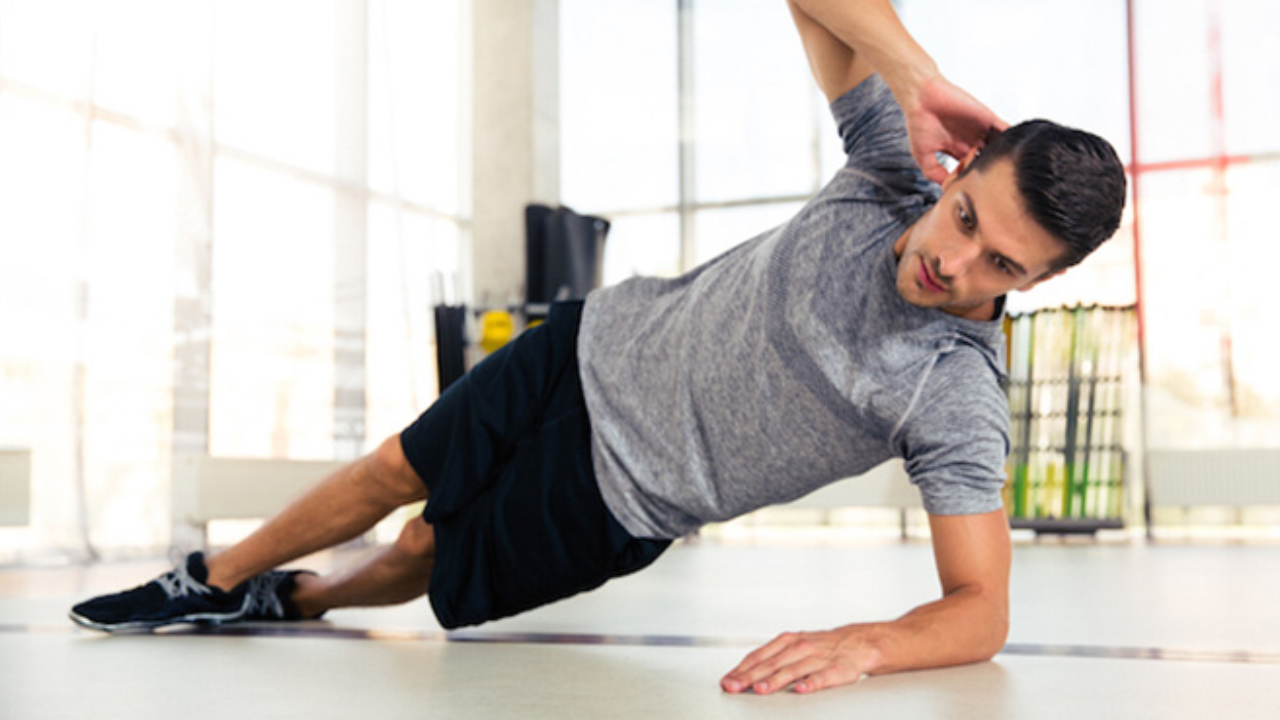
When young hockey players (ages 7 to 10) begin off-ice training, the focus should never be on heavy lifting or complex plyometrics. The absolute priority must be teaching foundational core stability, bracing, and the coordination between the upper and lower body. If a young athlete cannot control their own body weight and resist rotational forces, they will struggle to transfer power efficiently on the ice.
The Bird Dog Hold is the perfect introductory exercise to teach these critical concepts. By breaking the movement down into three distinct progressions, coaches can ensure young athletes build true stability before moving on to more advanced movements.
Why This Matters for Hockey
Hockey is a game of constant instability. Every time a player takes a stride, shoots a puck, or takes a hit, their core must brace to transfer force between their upper and lower body.
If a player lacks core stability, their body will "leak" energy. A strong, braced core acts as the bridge that connects the power generated by the legs to the upper body. The Bird Dog teaches young athletes how to actively engage their core to resist rotation and maintain a square, stable posture while their limbs are moving. This translates directly to better balance on the ice and more efficient force transfer during skating and shooting.
Exercise Breakdown: The Bird Dog Progressions
This exercise must be taught sequentially. Do not rush a young athlete to the final progression until they have mastered the first two.
Setup (All Progressions)
•Start in a quadruped position (on all fours).
•Position hands directly underneath the shoulders.
•Ensure hips are stacked directly over the knees.
•Maintain a slight bend in the elbows to avoid locking the joints (crucial for hypermobile athletes).
•Keep the back completely flat.
Progression 1: Leg Only
Imagine a quarter underneath the foot. Slide that foot back along the floor as far as possible, stop, and then lightly lift the foot just off the ground. Hold the position. The hips must remain perfectly square to the floor.
Progression 2: Arm Only
Lift one arm, make a fist, and extend it straight out in front as if trying to punch someone. Hold the position while keeping the shoulder stacked over the supporting hand. The shoulders must not rotate.
Progression 3: Arm and Leg (Full Bird Dog)
Start by sliding the leg back and lifting it slightly off the ground. Once the lower body is completely stable, lift the opposite arm and extend it forward in a punching motion. Hold this position strongly, resisting the urge to shift weight to the supporting side.
Key Coaching Points and Common Mistakes
•Square Hips and Shoulders: The primary goal is to resist rotation. Athletes will naturally want to shift their weight and rotate toward the side of the body that still has a hand and knee on the ground. Coaches must actively correct this.
•Hyperextending Joints: Watch for athletes locking out their elbows. They must use their muscles to stabilize the joint, not just hang on their ligaments.
•Patience: Rushing to the full Bird Dog before mastering the individual arm and leg holds will result in poor form and zero core engagement.
Programming and Application
Start with isometric holds of 10, 15, or 20 seconds per side to build endurance in the stabilizing muscles. Use this as a primary core exercise or as part of a dynamic warm-up before introducing more complex movements.
Final Thoughts
Elite athleticism is built on a foundation of control. By taking the time to teach young hockey players how to brace their core and coordinate their limbs through the Bird Dog progressions, coaches set them up for long-term success, safety, and power development on the ice.
About the Author
Travis Martell is the founder and head coach of Martell Elite Fitness, specializing in off-ice development for hockey players.
🌐 Website: MartellEliteFitness.com
📲 Follow on Instagram: @martell.elite.fitness
📺 YouTube: YouTube.com/MartellEliteFitness