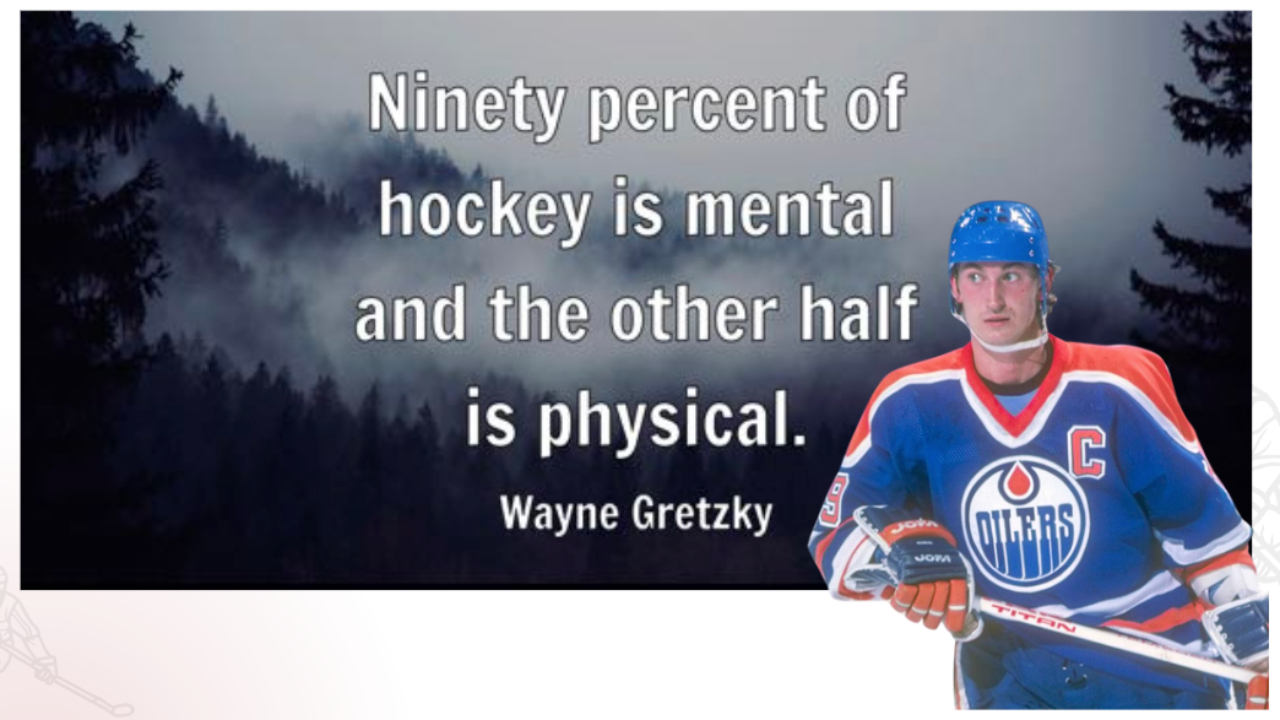
Most hockey coaches already know the mental side of the game matters. We see it in how players respond after mistakes, manage frustration, stay focused when tired, communicate under pressure, and get ready for the next shift.
A recent study of 318 Canadian NextGen athletes (athletes aged 14–25 competing in Canada’s high-performance pathway) found that athletes with stronger mental performance skills also reported fewer symptoms of anxiety and depression and better mental health. In simple terms, the skills athletes use to manage focus, emotions, stress, and pressure may matter for more than performance alone.
That gives coaches another reason to be more intentional about how these skills are developed. The good news is that the opportunities are already built into practice. Players make mistakes, get tired, lose focus, become frustrated, and have to respond under pressure.
The key is to decide what you want them to practise mentally.
- Lots of mistakes? Work on reseting quickly.
- High fatigue? Work on focus or communication.
- Competitive drill? Work on managing frustration.
- Fast, chaotic drill? Work on staying connected to the next job.
Before the drill, tell players what you want them to notice. During the drill, coach the response as well as the hockey play. Afterwards, take a minute to ask what worked and what they want to try again.
A simple way to remember it is:
- Before: What mental skill are we working on?
- During: Where will players get a chance to practice it?
- After: What did they learn?
The research also reminds us that mental skills are only one part of athlete well-being. They should never be used to help athletes tolerate unhealthy coaching or a harmful team environment. Supporting athletes means helping them build useful skills and creating an environment where they can develop safely.
One challenge for your next practice
Pick one drill and ask: What will players have to manage mentally in this drill?
Choose one mental skill, name it for the players, coach it during the drill, and take one minute afterwards to debrief it.
That is the shift from knowing mental skills matter to actually building them into daily practice.
Mental Metrics Lab helps coaches and sport organizations make mental performance development more intentional. Through assessment, interpretation, and practical tools, MML helps identify what athletes may need to develop and gives coaches a clearer starting point for building those skills into everyday practice.
Mental Metrics Lab | Assess. Analyze. Achieve.
www.mentalmetricslab.ca