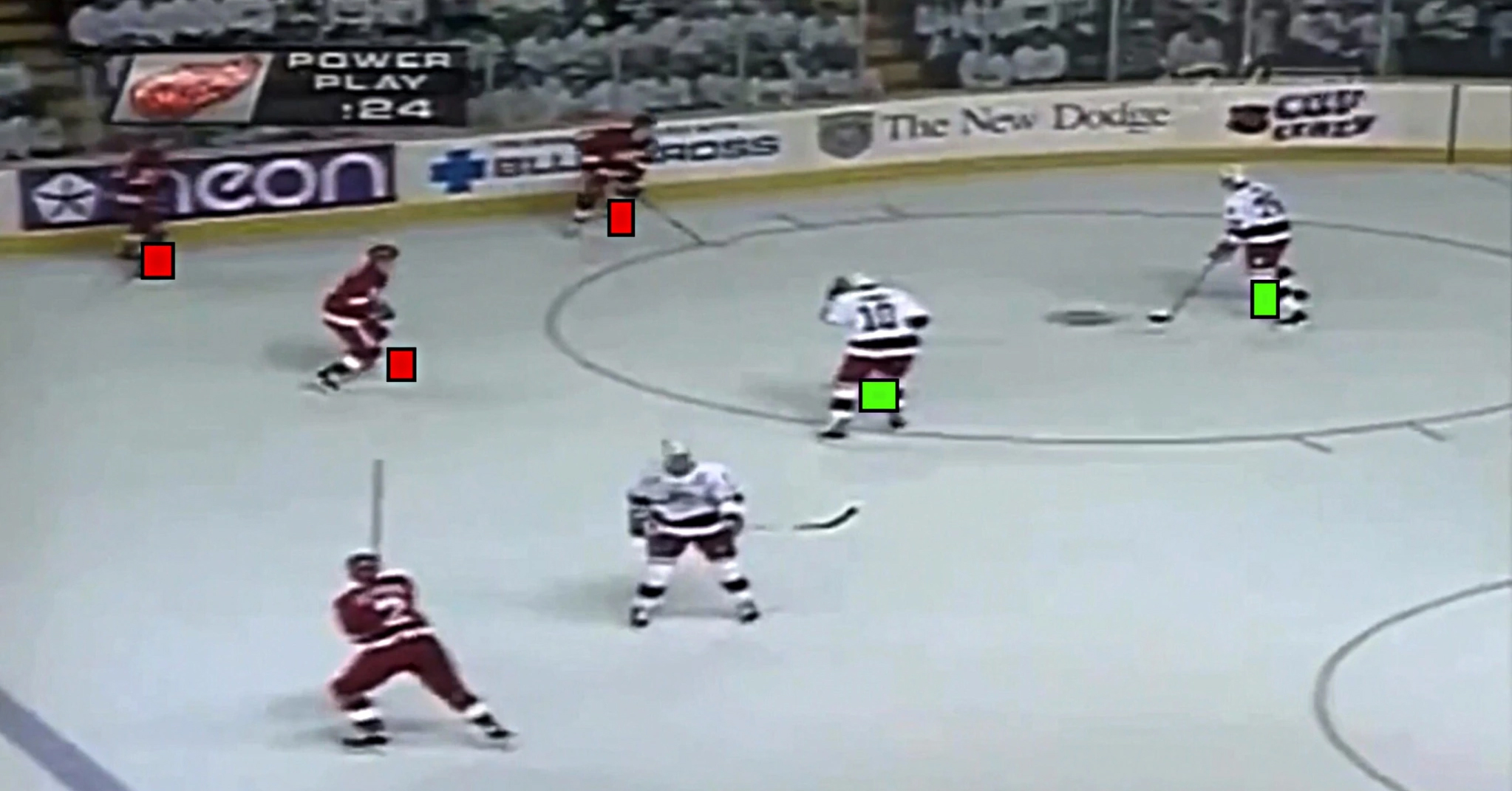
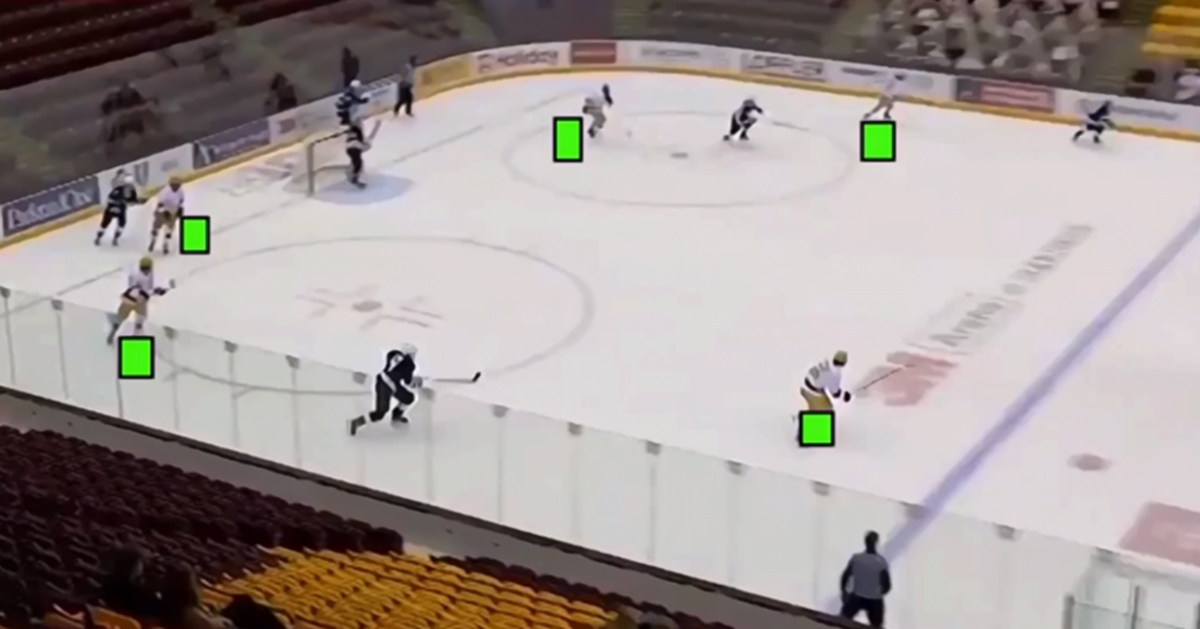
It is becoming increasingly difficult to exit your zone cleanly due to the following tactics used by the opposition:
-
Reloading by the forwards
-
Shrinking the zone (gapping) by the D
-
Pinching by the D
There’s just not much time or space for players away from the puck to receive it. This, in turn, makes it more difficult for the player with the puck to find a target to advance it to.
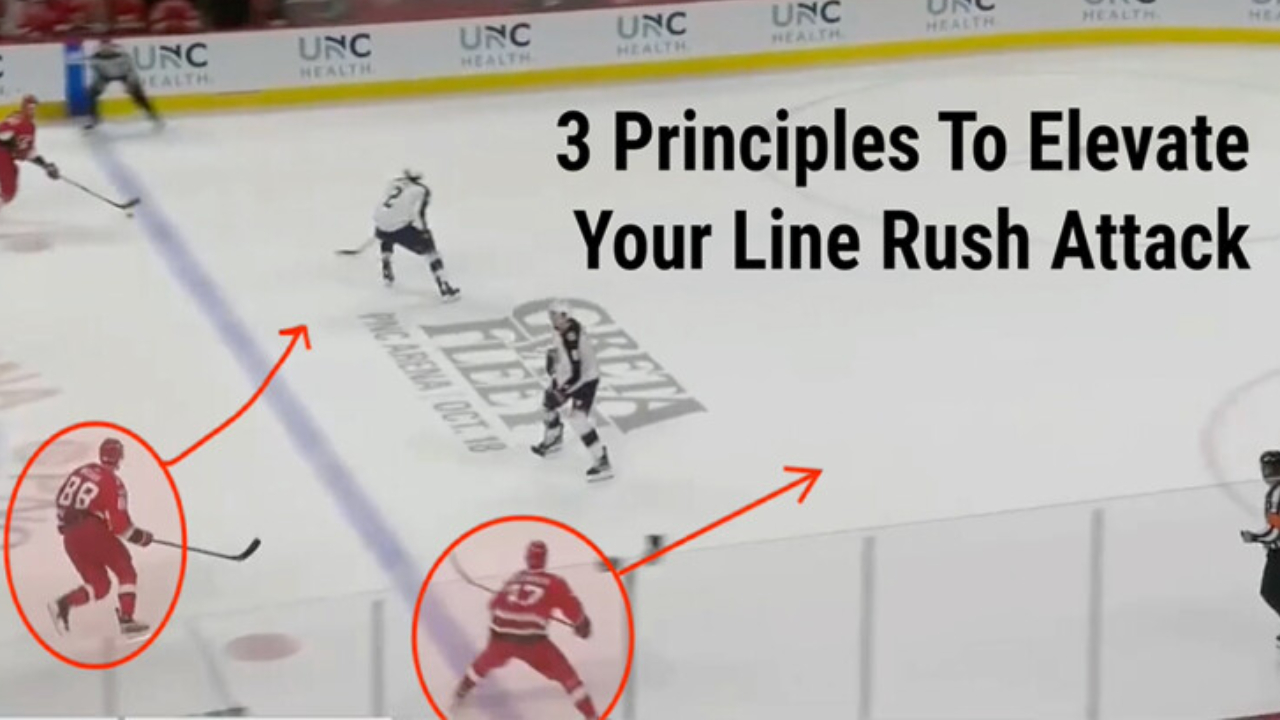
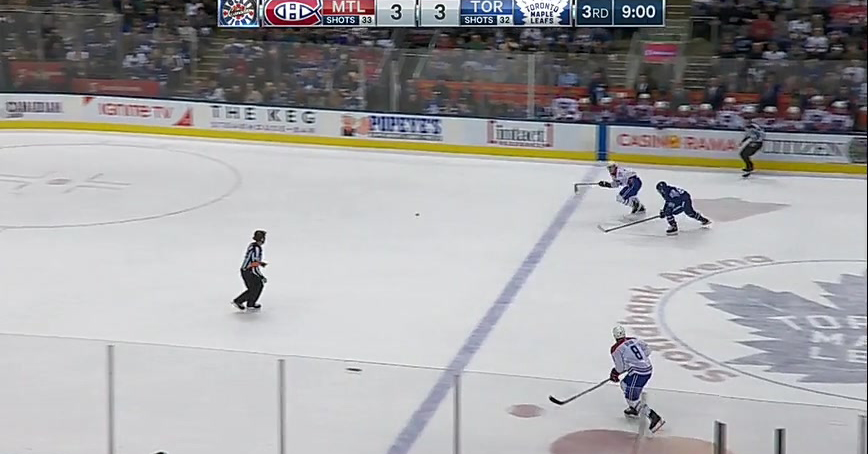
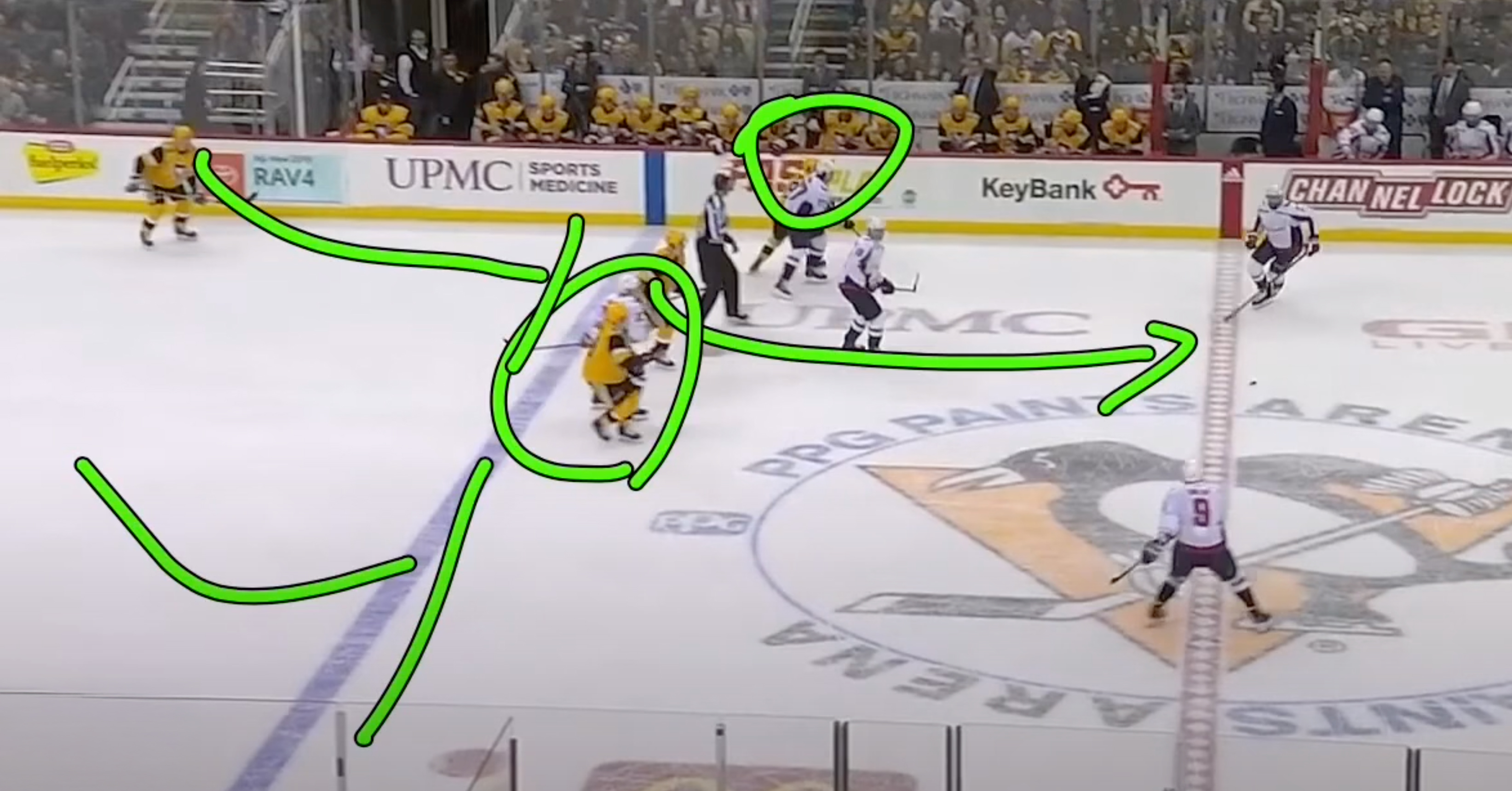
By stretching your wings as far as the opposition’s blue line, you can force one or both of their D out of the zone and back into the neutral zone. This prevents the opposition from defending with “five in the picture.” It then allows the player with the puck to send an indirect pass into the neutral zone. Although the stretching player may not be the intended target, they can act as a decoy to open up ice for a teammate.
To understand when a player should or should not stretch, they need to make the following reads:
-
Does my teammate have the puck on their forehand?
-
Are the puck carrier’s toe caps pointed up ice?
-
Is the puck carrier under pressure from the opposition?
If any of these conditions are not met, stretching will not only be ineffective but also dangerous.
Offence away from the puck is such a selfless act that it often goes unnoticed or unacknowledged. It is always one of the biggest challenges we face as coaches.
Part of the MAP Hockey IQ series, which focuses on offence at and away from the puck, as well as defence at and away from the puck. Learn more about 1on1 game review and more support with MAP Hockey here.