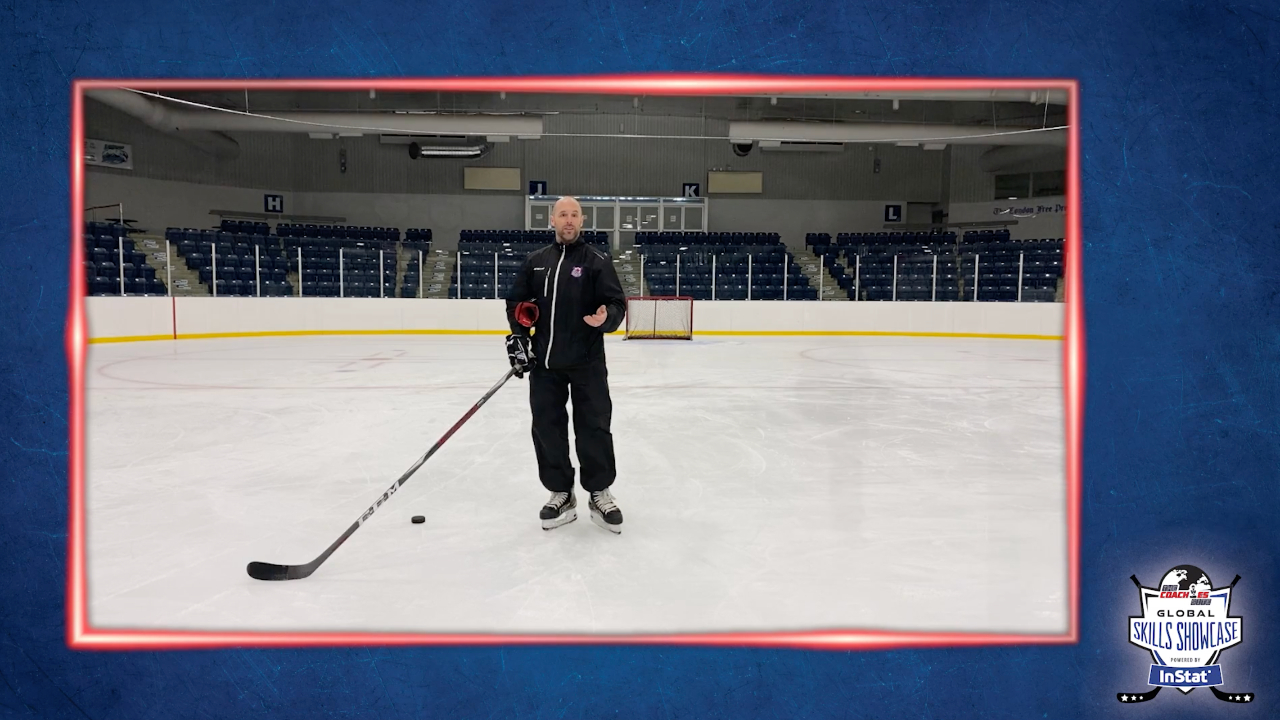
Darren Rommerdahl came to Hockey Calgary Leadership Day in the fall of 2025 with the perspective of someone who spends his days thinking about how offence is created at the highest levels of the game. As a Development Coach with the Calgary Flames, Rommerdahl works directly with prospects navigating the jump to professional hockey, helping them learn the details that separate players who can play from players who can produce.
His background includes years of coaching and skill development at the junior and professional levels, with a clear emphasis on player growth. That development lens shaped everything he shared with the room. The focus was not on systems or set plays, it was on something more foundational.
Deception
Rommerdahl believes that if we want to create more offence, we have to intentionally teach players how to gain small advantages. And for him, that starts with three skills every player already possesses: eyes, hands, and feet.
Every player can use one. Elite players can use two at the same time. Super elite players can layer all three together.
That idea alone shifts how we look at skill development.
- Eyes: The eyes can manipulate defenders. Rommerdahl shared a clip of a player looking in one direction while shooting in another, pulling the defender’s attention away from the true threat.
- Hands: The hands can sell fakes, threatening a shot before sliding a pass through a seam.
- Feet: The feet direct the defender’s eyes as well, with toe direction subtly suggesting one route before attacking another.
When players combine those tools, deception is created with the puck, and that deception forces hesitation.
Rommerdahl then reframed shooting in a way that most of us don’t always consider. Every time a player shoots the puck, there are six possible outcomes: a goal, an immediate secondary chance, a recoverable puck, a whistle, an unrecoverable puck, or a miss that leads to a loss of possession and a counterattack. Only one of those is perfect. Several are productive, and some are dangerous.
If we understand that, then we start to think differently about where and how offence is generated.
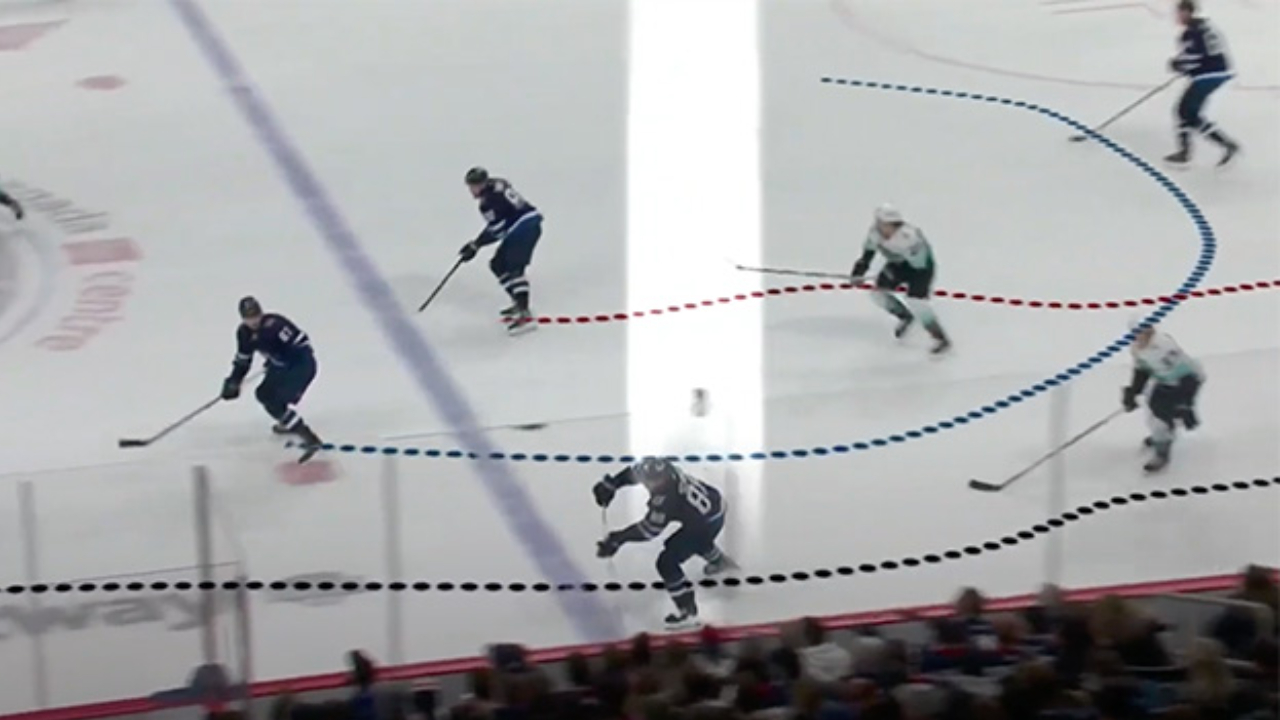
Rommerdahl walked through data showing where goals are most frequently scored. While many players are taught to think “get to the slot,” the highest concentration of goals comes from right outside the crease. Close behind are what he calls the alleys, the areas off to the sides of the net. Those goals are often the result of rebounds or pucks moving laterally across the zone.
In other words, deception.
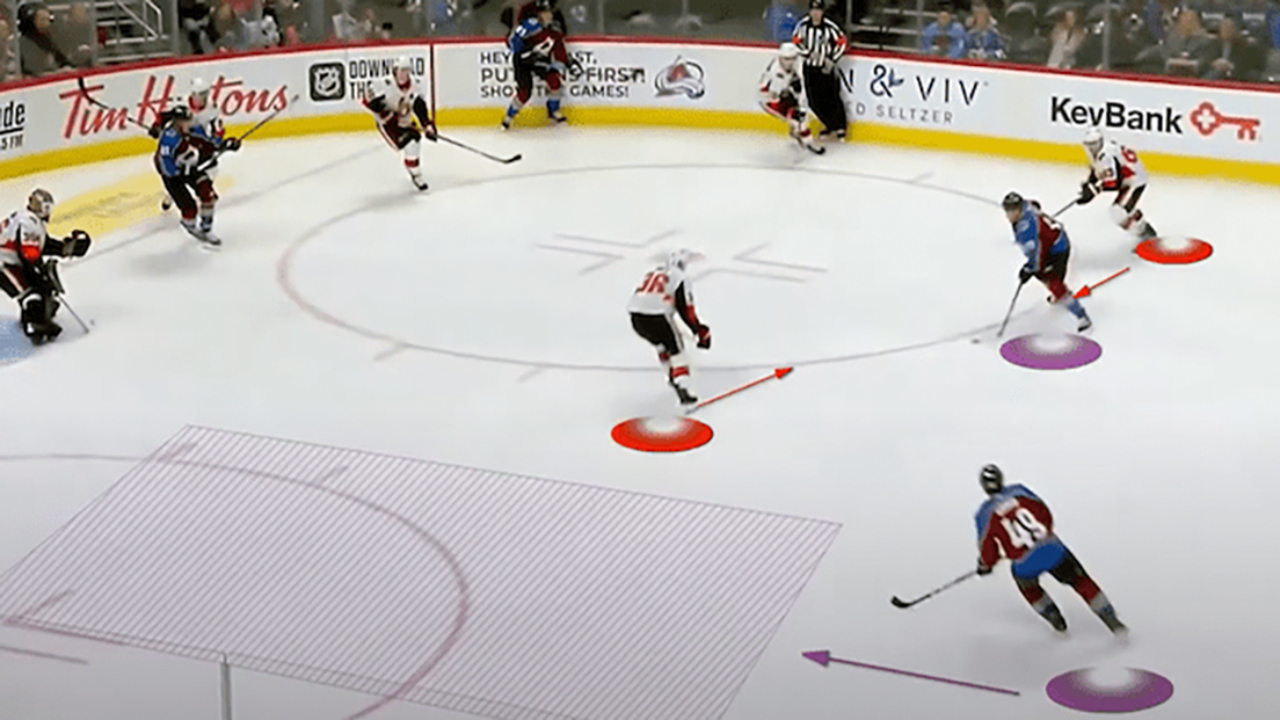
Side-to-side movement forces defenders and goaltenders to adjust. Adjustments create openings and openings create offence.
Throughout the remainder of his presentation, Rommerdahl broke down scoring habits and common plays built around this principle. The details varied, but the objective remained the same. To gain an advantage you must force a defender to look one way while you go the other. This is how strong players make the game uncomfortable for the other team.
As coaches, deception with the eyes, hands, and feet applies to our players and to us. If we are not intentionally teaching deception we may be missing opportunities to create more offence without adding complexity.
Coaches’ Challenge
In your next practice, design one drill where players must use at least two of the three tools, eyes, hands, or feet, before they can attack the net. Teach them to manipulate before they execute. When players learn to create small advantages, goals become the by-product of intention rather than chance.
Noteworthy timestamps:
- 0:00 3 Levels of deception
- 4:45 Scoring habits from shooting
- 8:00 Where are goals scored?
- 9:55 2 types of shots
- 17:15 Putting it into practice
- 22:40 Elite scoring habits