When the solution isn't available, can the athlete create it?
By Coach Barry Jones
IIHF Level 3 High Performance | USA Hockey Level 4 Performance
Throughout this series, we've progressively changed the problem.
First, we kept more information in the task.
Then we explored UNDER, OVER, AROUND and THROUGH.
We calibrated solutions.
We looked at what happens when exploration gets stuck.
Then we began stacking problems together.
But all of those ideas can still leave us with one assumption:
The opportunity already exists.
There is space UNDER the stick.
A route AROUND the defender.
A seam THROUGH pressure.
An opportunity to go OVER.
Hockey isn't always that generous.
Sometimes the space we want simply isn't there.
So perhaps the next question for the athlete isn't:
Where is the space?
It is:
How can I create it?
From Finding Space to Creating It
This changes the problem considerably.
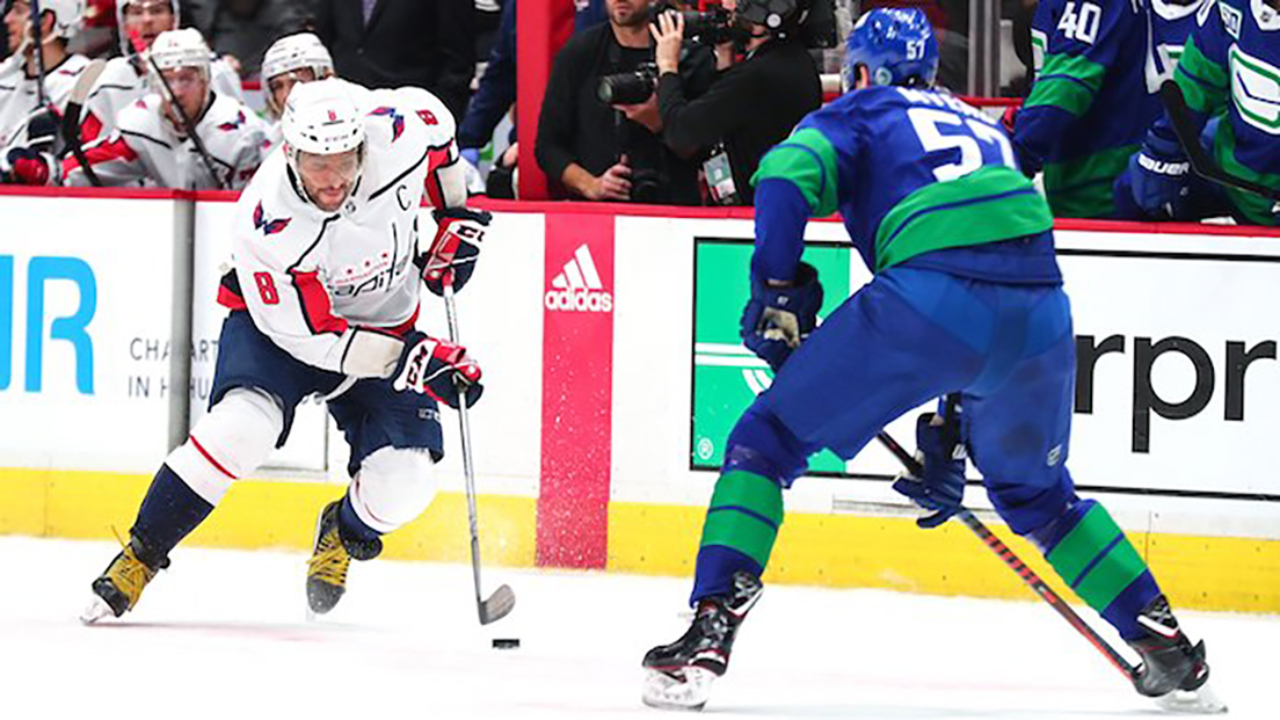
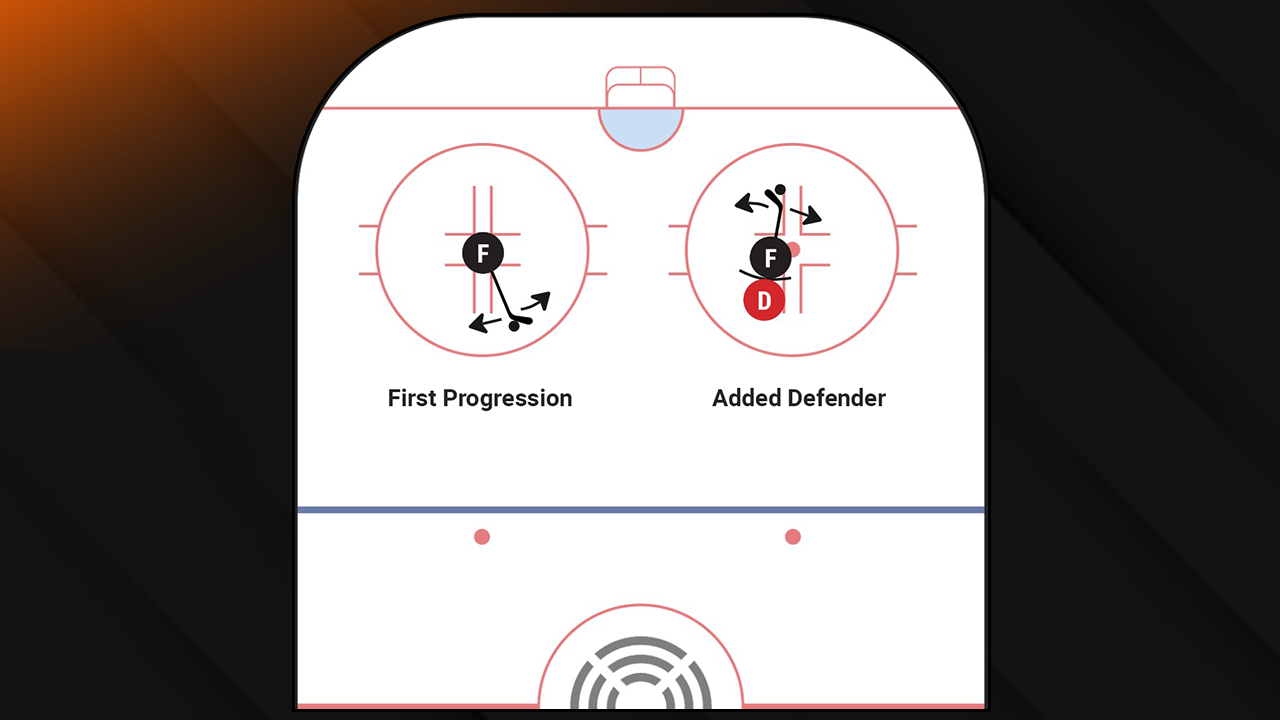
Imagine an athlete attacks a defender.
The defender has good position.
Their stick closes UNDER.
Their body takes away AROUND.
There is no obvious THROUGH.
The athlete could simply choose another direction.
But what if they could change the defender?
Move the puck laterally.
Change skating direction.
Alter speed.
Shift body position.
Show one intention before executing another.
Now the athlete isn't only responding to the environment.
Their actions are changing it.
The defender responds.
The relationship reorganises.
A new opportunity appears.
The athlete hasn't found space. They've helped create it.
One Relationship Can Create Another
This is where U-O-A-T becomes more interesting for me.
Until now, we've largely treated UNDER, OVER, AROUND and THROUGH as ways of solving spatial problems.
But one relationship can also be used to create another.
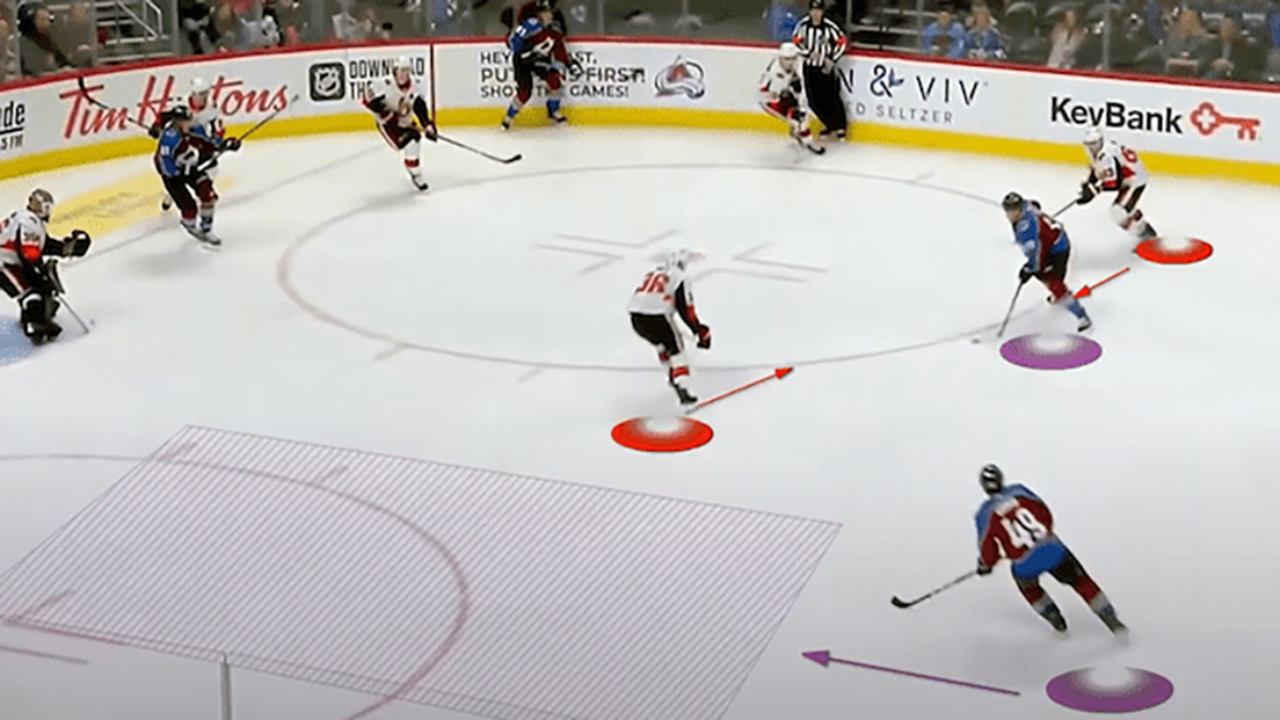
Show AROUND, and the defender may move their stick or feet to protect the outside.
That movement might create THROUGH.
Threaten THROUGH, and the defender may collapse toward the middle.
Now AROUND becomes available.
Move the puck UNDER a stick once or twice and the defender may lower their stick position.
Could that create an opportunity OVER?
The first action doesn't necessarily need to beat the defender.
Sometimes its job is to change the defender.
One spatial relationship can be used to manipulate the defender and create another.
Now we're moving beyond simply executing skills.
We're beginning to explore deception.
Deception Is Information
We often talk about deception as a collection of moves.
Head fake.
Shoulder fake.
Toe drag.
Look-off.
Fake shot.
Those can all be useful.
But I think there is another way to frame it for coaches.
What information are we giving the defender?
The defender is also perceiving.
They're reading the puck.
Our stick.
Our hips.
Our speed.
Our direction.
Our eyes.
Our relationship to the available space.
And they're organising their movement around that information.
That means an attacker can intentionally provide information that invites a response.
Show the defender something.
Let them organise around it.
Then exploit what their movement creates.
This gives us a useful sequence:
PERCEIVE → MANIPULATE → REORGANISE → EXPLOIT
See the relationship.
Change something.
Allow the defender to respond.
Attack the new opportunity.
Don't Teach the Fake, Create the Reason
This is where I think task design becomes important.
I could teach an athlete a fake.
Demonstrate it.
Repeat it.
Then tell them to use it against a defender.
But again, I can move the prescription backwards.
Instead of starting with:
Today we're learning a fake.
I can create a defender who takes away the athlete's preferred solution.
Now ask:
What could you do to make that space available?
The athlete might move the puck.
Change speed.
Change angle.
Show AROUND before going THROUGH.
Maybe a fake begins to emerge because the problem creates a reason for deception.
Then, if the athlete needs help organising the movement, I can scaffold it.
The difference is that the technique now has context.
They know what it is for.
Don't just teach the fake. Create the reason to fake.
The 360 Becomes More Than a 360
In Part 5, I talked about my “360 kid.”
He has a movement he trusts.
Everyone knows it.
Previously, we used U-O-A-T to broaden his options so AROUND wasn't always solved with the same 360.
But there is another progression.
His reputation for using the 360 can itself become information.
A defender sees the setup.
Recognises the movement.
Starts preparing for AROUND.
That's no longer necessarily a problem.
It can become an opportunity.
Can the athlete show enough of the 360 to invite the defender to protect AROUND, then attack THROUGH?
Now the old solution hasn't been removed.
It has been weaponised.
The athlete isn't simply asking:
What move can I use?
They're beginning to ask:
What can I make the defender believe I'm going to do?
That's a very different level of problem solving.
The Defender Isn't a Cone
For this to work, the defender matters.
A cone can't be manipulated.
It doesn't perceive.
It doesn't anticipate.
It doesn't adapt.
A live defender does.
Their behaviour provides information to the attacker, but the attacker's behaviour also provides information to them.
Both are continuously changing the problem for each other.
That's why the defender isn't simply pressure added at the end of skill development.
The defender is part of the information that gives the skill meaning.
This doesn't mean every repetition needs full competitive pressure.
We can scale the defender.
Limit their movement.
Change their starting position.
Give them a specific intention.
Manipulate space.
But if we're developing deception, eventually we need something capable of being deceived.
Designing for Manipulation
This has changed some of the questions I ask when designing tasks.
Instead of only:
Where is the available space?
I can ask:
Can the athlete influence where the defender puts their stick?
Can they make the defender rotate?
Can they invite pressure in one direction?
Can they make one relationship disappear so another appears?
Now the task isn't simply testing whether the athlete can recognise an affordance.
We're creating opportunities for them to influence what becomes available next.
The athlete becomes part of designing the problem they eventually solve.
Take It to the Ice
Choose a one-on-one problem your athletes already understand.
Give the defender a clear intention.
Perhaps they must protect the middle.
Perhaps they must deny UNDER.
Perhaps they must take away the attacker's preferred route AROUND.
Then resist giving the attacker a move.
Ask:
What could you do to make the space you want become available?
Watch what happens.
If they move the puck, what does the defender do?
If they change speed, does the defender reorganise?
If they show AROUND, does THROUGH appear?
If nothing changes, help them explore what information they're giving the defender.
The goal isn't simply to beat them.
It's to discover:
How can my actions change your actions, and what opportunity does that create for me?
Because at higher levels of problem solving, athletes aren't only reacting to the game in front of them.
They're beginning to shape what happens next.
Don't just find the space. Create it.
Coming Next: Removing the Scaffold
We've progressively added tools throughout this series.
U-O-A-T.
Calibration.
Scaffolding.
Stacking.
Manipulation.
But none of them should become another system athletes depend on.
In Part 7, we'll explore what happens when the coach begins removing these supports, when U-O-A-T disappears from the language, the constraints loosen and athletes are left with the game itself.
Because ultimately, the framework has done its job when the athlete no longer needs it.
Barry Jones is an IIHF Level 3 High Performance Coach and USA Hockey Level 4 Performance Coach. His work blends ecological dynamics, nonlinear design, and athlete-centred leadership to build adaptive teams that thrive in uncertainty. He is also the developer of Task Sketch, a tool designed to support coaches in creating game-representative training environments.