This game is an adaptation of a 3v3 format I have seen previously. I prefer using a 2v2 structure with my U14 players because it increases individual involvement and accountability. With only two players per team, nobody can hide: both the puck carrier and the off-puck player must actively contribute to solving the game situation.
Game organization
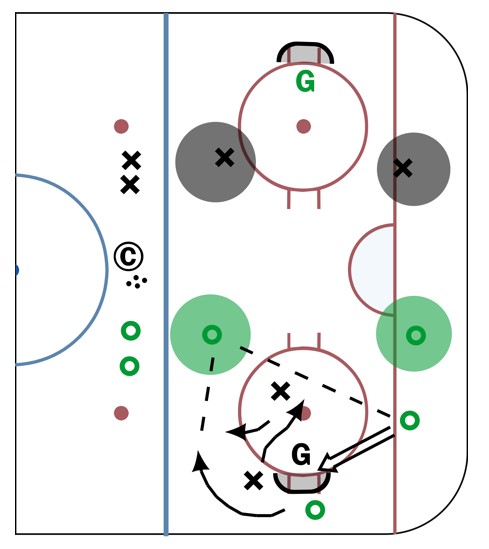
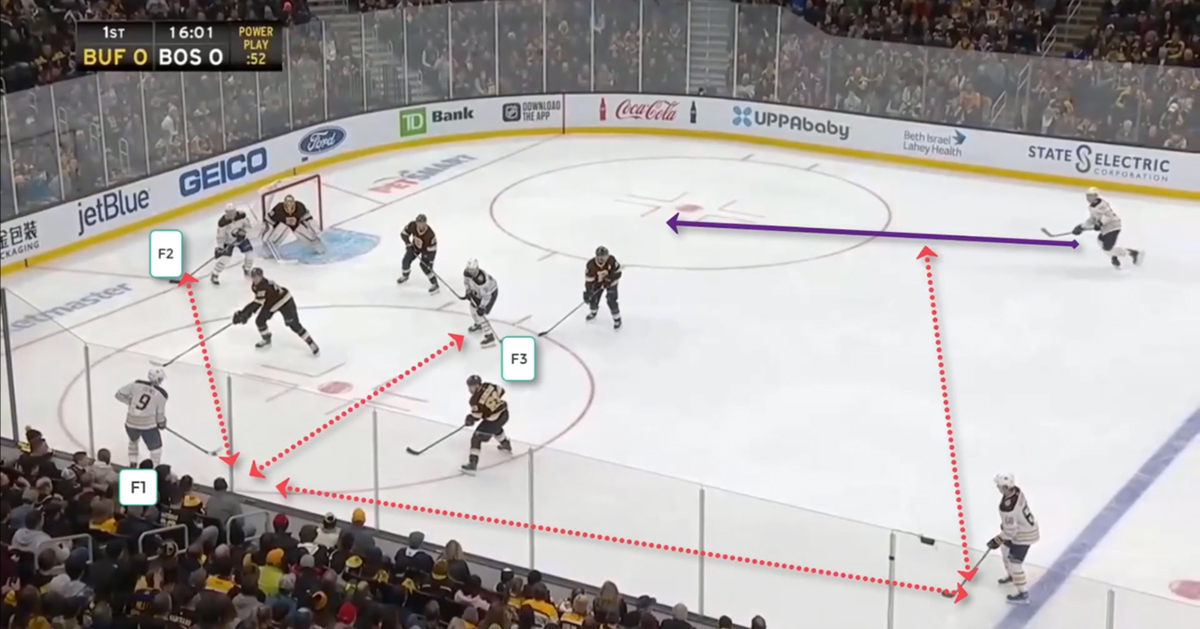
Play 2v2 in a defined area of the neutral zone, with two offensive support players (jokers) positioned outside the playing area.
The objective is to create quick north–south transitions, using the support players to initiate the attack.
-
During the transition from the defensive half, the attacking team must connect with a support player before progressing toward the opponent's net.
-
Once the attacking team enters the offensive half, the support players can no longer be used. The two attackers must solve the situation together.
-
After a goal, a save or when the puck leaves the playing area, the coach introduces a new puck from a strategically selected location.
-
Rotate players between the playing area, support positions and rest.
Why 2v2 instead of 3v3?
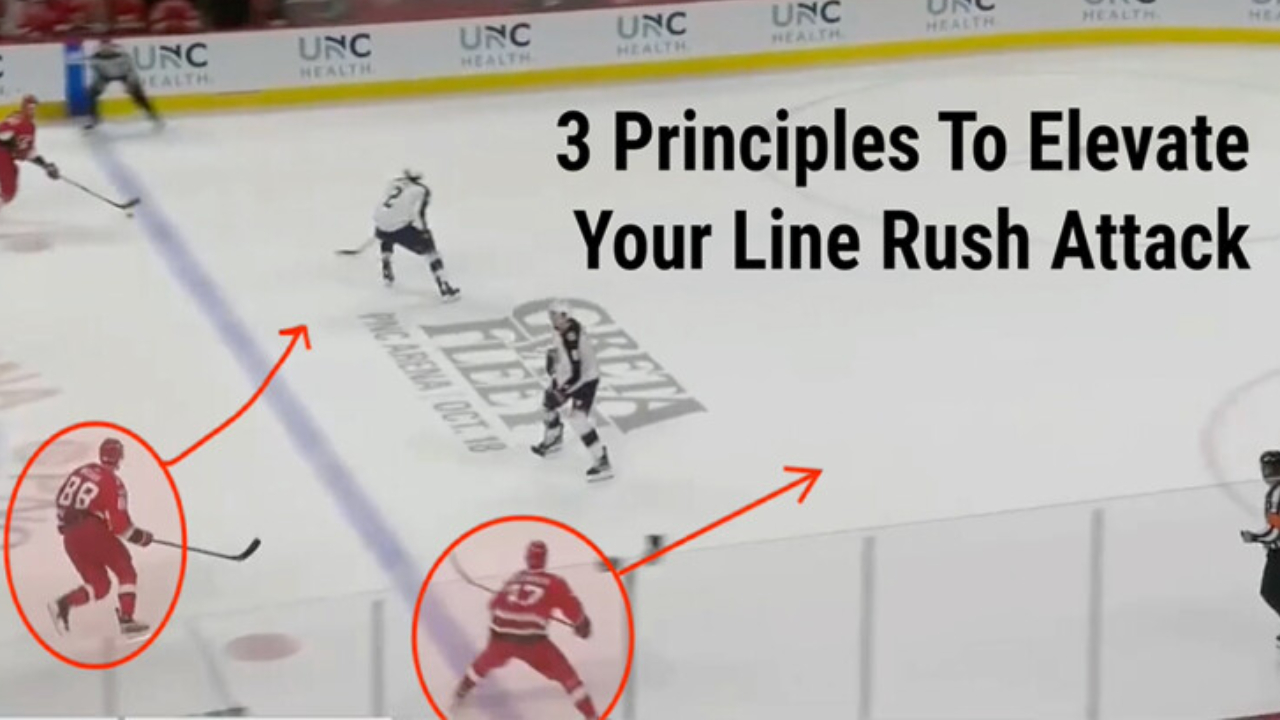
At U14 level, executing a give-and-go involving the original puck carrier is often relatively familiar. However, recognizing when and how the second attacker should separate from their defender, anticipate the next action and create a passing option is significantly more challenging.
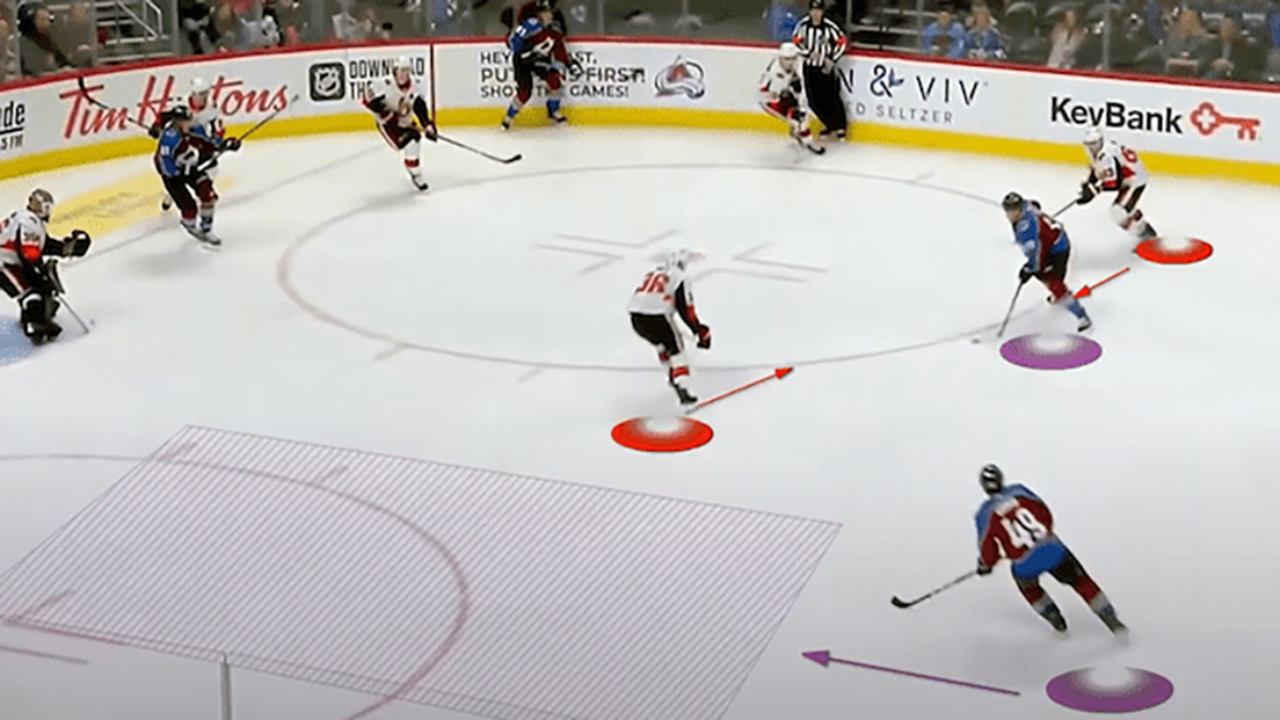
Reducing the game to 2v2 makes this responsibility more visible. The off-puck player cannot remain passive or rely on a third teammate to create the solution.
Why restrict the support players?
Allowing support players only during the defensive-to-offensive transition encourages the attacking pair to create separation through north–south movement.
The off-puck player must recognize the passing opportunity, anticipate the return option and beat their defensive coverage through timing, movement and positioning.
Once in the offensive half, removing the support option changes the problem. Players must now protect the puck under pressure, scan for available space, recognize their teammate's movements and create an offensive opportunity without external assistance.
The importance of coach puck placement
Rather than restarting every sequence from the same location, the coach can introduce pucks into strategically selected areas to recreate specific game situations.
For example, placing a loose puck in the defensive half creates a retrieval situation where players must quickly recognize pressure, identify support and initiate a transition.
This allows the coach to manipulate the information and constraints of the environment while keeping the players responsible for finding their own solutions.
The intention is not to teach one predetermined pattern, but to create repeated opportunities for players to perceive, decide, act and adapt.
Key Points
Off-puck awareness and separation
-
Scan before moving and recognize the defender's positioning.
-
Create separation through timing, changes of speed and north–south movement.
-
Anticipate the next passing opportunity instead of reacting only after the puck has been played.
Transition and support
-
Use the support player to initiate a quick transition.
-
Recognize when to accelerate into available space.
-
Coordinate puck-carrier and off-puck movements to beat defensive coverage.
Offensive problem-solving
-
Protect the puck when external support is no longer available.
-
Scan while under pressure and identify emerging passing or attacking options.
-
Adapt to the defender's actions rather than forcing a predetermined play.
Coaching through constraints
-
Observe the behaviors emerging from the 2v2 structure.
-
Use strategic puck placement to recreate different retrieval and transition situations.
-
Adjust the constraints when needed, while preserving players' freedom to explore functional solutions.
Coaching intention: Don't give players the solution. Design the environment so they have to find one.